
How to Track Headcount Plan vs. Actual (Without Losing Your Mind)

It's the second week of the month. Finance is trying to close the books, and someone asks a question that should be straightforward: "How many people do we actually have vs. what we planned?"
What follows is a 48-hour scramble. Someone pulls headcount from the HRIS. Someone else pulls the approved plan from a spreadsheet or Adaptive. A third person checks the ATS to figure out how many reqs are open and where they stand. The numbers don't match. They never match. And the next two days are spent reconciling data, chasing down hiring managers, and explaining variance that happened weeks ago.
Headcount plan vs actual tracking shouldn't be this painful. But at most companies, it is, because the systems, timelines, and definitions involved were never designed to work together. If you've ever felt like you're losing your mind trying to answer "where are we vs. plan?" you're not alone. The problem isn't you. It's the infrastructure.

Why Headcount Plan vs. Actual Tracking Breaks Down
The concept is simple: compare what you planned to what actually happened. In practice, it's a mess. Here's why.
Different Systems, Different Numbers
Your headcount plan lives in one place. Maybe it's in Adaptive Planning, maybe it's a spreadsheet, maybe it's in your FP&A tool. Your actual headcount data lives somewhere else: Workday, BambooHR, or another HRIS. Your hiring activity lives in a third place: Greenhouse, Lever, or another ATS.
Each system tracks headcount differently. Finance counts approved positions. HR counts active employees. Recruiting counts open requisitions. A single headcount change, like a backfill, might show up differently in all three systems, at different times, with different labels.
When you try to compare plan vs. actual, you're comparing numbers that were generated by different systems with different definitions on different timelines. No wonder they don't match.
Gartner has found that 72% of HR and Finance teams don't share systems for workforce planning. That's not a technology problem. It's a governance problem. And it's the root cause of every painful reconciliation exercise.
Different Timelines, Different Realities
Plans are built with assumptions about when things will happen. This role fills in March. That backfill opens in April. Attrition runs at 12% annually.
Reality doesn't follow the plan's timeline. A key hire takes three months longer than expected. An unexpected resignation creates a backfill that wasn't in the plan. A department restructuring moves roles between cost centers.
Each of these changes creates variance. But the variance doesn't show up in any single system in real time. It shows up in the monthly reconciliation, after Finance has already submitted the forecast, after the board deck has been built, after the recruiting team has been working against outdated priorities.
Different Definitions, Different Answers
Ask five people in your organization "what counts as headcount?" and you'll get five different answers.
Does a contractor count? What about an intern who converts to full-time? If someone gives notice but hasn't left yet, are they in the headcount? If a role is approved but not yet posted, does it count as planned headcount?
Without a shared definition, plan vs. actual tracking is a philosophical debate masquerading as a data exercise. And the debate happens every month, consuming time that should be spent on actual analysis.
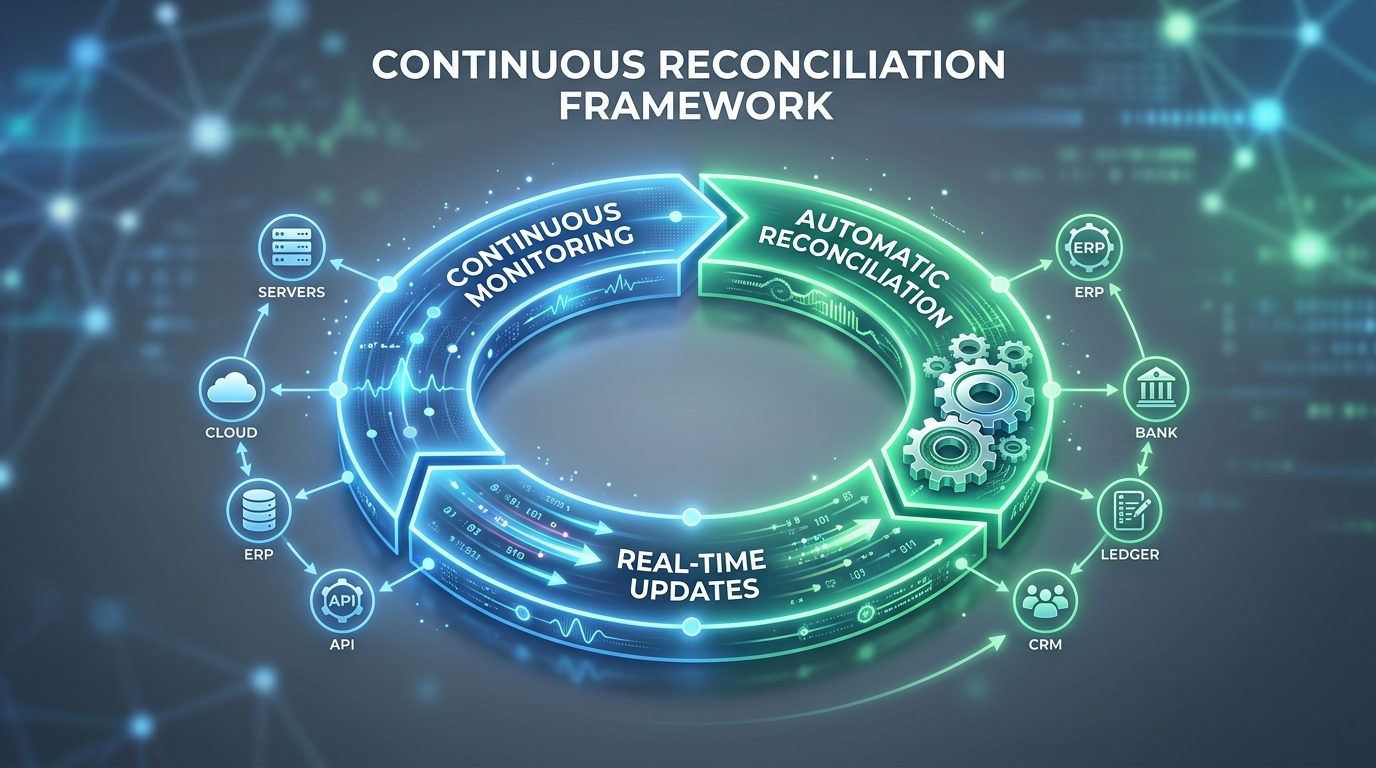
The Framework for Continuous Headcount Plan vs Actual Tracking
Here's the framework that replaces the monthly fire drill with something that actually works.
Step 1: Establish a Single Source of Truth
Before you can track plan vs. actual, you need agreement on what "plan" means and what "actual" means. This sounds obvious, but it's where most companies skip a step.
Define your headcount unit. Is it positions, people, or FTEs? Pick one and use it consistently across Finance, HR, and Recruiting. Most governance-mature organizations use positions as the unit of record because positions persist even when people leave.
Centralize the plan. Your approved headcount plan needs to live in one place that everyone references. Not a copy in Finance's folder and a different copy in HR's system. One plan, one version, one source.
Connect actuals automatically. The data about what's actually happening, who's been hired, who's left, what reqs are open, should flow into your tracking system automatically from your HRIS and ATS. Manual entry means manual error and manual delay.
Real-time reconciliation between your plan and your source systems is the foundation. Without it, you're always working with stale data.
Step 2: Track the Right Types of Variance
Not all variance is created equal. Understanding the types of variance helps you diagnose root causes instead of just reporting the gap.
Timing variance. The role is still planned, but it's filling later (or earlier) than expected. This is the most common type of variance and the one most likely to correct itself. But it matters for cash flow forecasting.
Compensation variance. The role filled, but at a different cost than planned. Maybe market rates shifted. Maybe the hiring manager negotiated above band. This variance sticks and compounds.
Position variance. Roles were added, removed, split, or merged after the plan was approved. This is where governance breakdowns show up. Every unplanned position is a decision that happened outside the approved plan.
Approval variance. Requisitions were opened, delayed, or denied differently than planned. This signals a disconnect between the plan and the operational reality.
Track these separately. A blended "we're 12 over plan" number doesn't help anyone. But "we're 12 over plan: 5 from timing, 4 from unplanned new positions, and 3 from backfills that exceeded budget" tells a story Finance can act on.
Step 3: Set Variance Thresholds and Alerts
Monthly variance reports are too late. By the time you see the deviation, the cost is already incurred.
Set thresholds that trigger alerts in real time:
Department exceeds planned headcount by more than 5%
A requisition opens for a role not in the approved plan
Compensation on an offer exceeds the planned budget by more than 10%
Attrition in a department exceeds the planned rate for the quarter
Industry benchmarks suggest that if plan variance climbs above 15%, something systemic is broken and needs immediate investigation, not a footnote in next month's report.
These alerts should go to Finance and the relevant business partner simultaneously. Not as an FYI, but as a governance trigger that requires acknowledgment.

How Do You Track Plan vs. Actual Across Departments?
Department-level tracking is where headcount plan vs actual tracking gets really valuable, and really complicated.
Each department has its own plan, its own hiring timeline, and its own operational reality. Engineering might be behind plan because roles are hard to fill. Sales might be ahead of plan because the CRO pushed to accelerate hiring. Corporate functions might be on plan but with a completely different mix of roles than originally intended.
The key is giving each department a clear view of their own plan vs. actual, while rolling up to a company-wide view that Finance controls. This requires:
Department-level dashboards. Hiring managers and department heads should see their planned vs. actual headcount in real time. This creates accountability at the source, not just at Finance.
Budget owner visibility. The person accountable for a department's headcount budget should see every requisition, every hire, and every variance against their specific plan. Scenario modeling at the department level lets them project forward impact.
Consolidated reporting. Finance needs the rolled-up view: company-wide plan vs. actual, broken down by department, by role type, and by cost. This is the view that goes to the board, and it needs to be accurate without a week of manual reconciliation.

Why Monthly Variance Reports Are Too Late
If your headcount plan vs actual tracking cadence is monthly, you're managing reactively.
Consider the timeline: a manager requests a role on March 3rd. It gets approved (somehow) by March 7th. The req opens in the ATS on March 10th. A recruiter starts sourcing. By March 25th, they've screened 40 candidates and scheduled interviews.
On April 5th, Finance runs the monthly variance report and discovers the role wasn't in the plan. Now you have two bad options: let the hire proceed (which means you're over budget) or kill the req (which means a recruiter wasted a month and a candidate pipeline gets torched).
Both options are expensive. Both were preventable. If the req had been validated against the budget at the moment it was submitted, before it went to recruiting, the problem never happens.
This is why continuous tracking matters. Not because Finance wants to micromanage, but because catching variance at the moment of decision is orders of magnitude cheaper than catching it at month-end.
Companies that implement real-time headcount governance report eliminating 100% of manual data reconciliation and reducing admin time by 80%. That's not incremental improvement. That's a fundamentally different way of operating.
Conclusion
Headcount plan vs actual tracking breaks down because the systems, timelines, and definitions involved were never designed to work together. The fix isn't more spreadsheet heroics. It's infrastructure that connects your plan to your people data automatically and surfaces variance at the moment of decision, not at month-end.
The framework is straightforward: establish a single source of truth, track the right types of variance, set real-time alerts, and push accountability to department level. What makes it hard is the technology required to connect all the pieces.
Kinnect was built for this exact problem. It connects your approved headcount plan to Workday and your ATS through a unified platform, tracks plan vs. actual in real time, and gives both Finance and department leaders the visibility they need to stay on plan without the monthly reconciliation nightmare.
Book a demo with Seena to see how continuous headcount tracking replaces the monthly variance fire drill.