
Strategic Workforce Planning: A Framework for Growing Companies

Strategic workforce planning sounds like something that requires a McKinsey engagement and a six-figure consulting budget. That's been the reality for decades. The frameworks exist in SHRM whitepapers and Gartner research decks, but they were designed for Fortune 500 companies with dedicated workforce planning teams. If you're a growing mid-market company trying to figure out whether you'll have the right people in the right roles 18 months from now, those frameworks feel disconnected from your actual reality.
Here's the uncomfortable truth: only 15% of organizations engage in strategic workforce planning, according to Gartner. Not because it isn't valuable. Because it's been made unnecessarily complex. The concepts are sound. The execution model is broken for companies that don't have a Chief People Officer with a staff of 30.
This guide strips strategic workforce planning down to a practical, five-step framework that mid-market companies can actually use. No consulting jargon. No 18-month implementation timeline. Just a clear path from reactive hiring to proactive workforce strategy that connects to your business outcomes.

What Is Strategic Workforce Planning (and What It Isn't)?
Strategic workforce planning is the process of connecting your business strategy to your talent strategy over a 2-5 year horizon. It answers the question: "Given where this company is going, will we have the right people with the right skills to get there?"
Strategic vs. Tactical
This is different from tactical headcount planning, which answers a narrower question: "How many people do we need to hire this year, and what will it cost?" Tactical planning is about filling seats. Strategic workforce planning is about making sure those seats are the right ones.
Here's an example. Your tactical headcount plan says you need 15 new engineers in Q3. Your strategic workforce plan asks whether those 15 engineers should be backend specialists, ML engineers, or platform engineers based on where your product roadmap is heading over the next three years. It also asks whether you should build that capability in-house, acquire it through M&A, or contract it out.
Why Most Companies Skip It
It's hard to prioritize something with a 2-3 year payoff when you're struggling to fill open reqs today. Only 29% of CHROs say they're confident in their ability to deliver on strategic workforce planning goals.
But skipping it creates a compounding problem. Every year you hire reactively is a year you're building a workforce shaped by urgency instead of strategy. Three years of that creates an org structure that nobody designed and nobody can explain.
Step 1: Align Workforce Strategy to Business Strategy
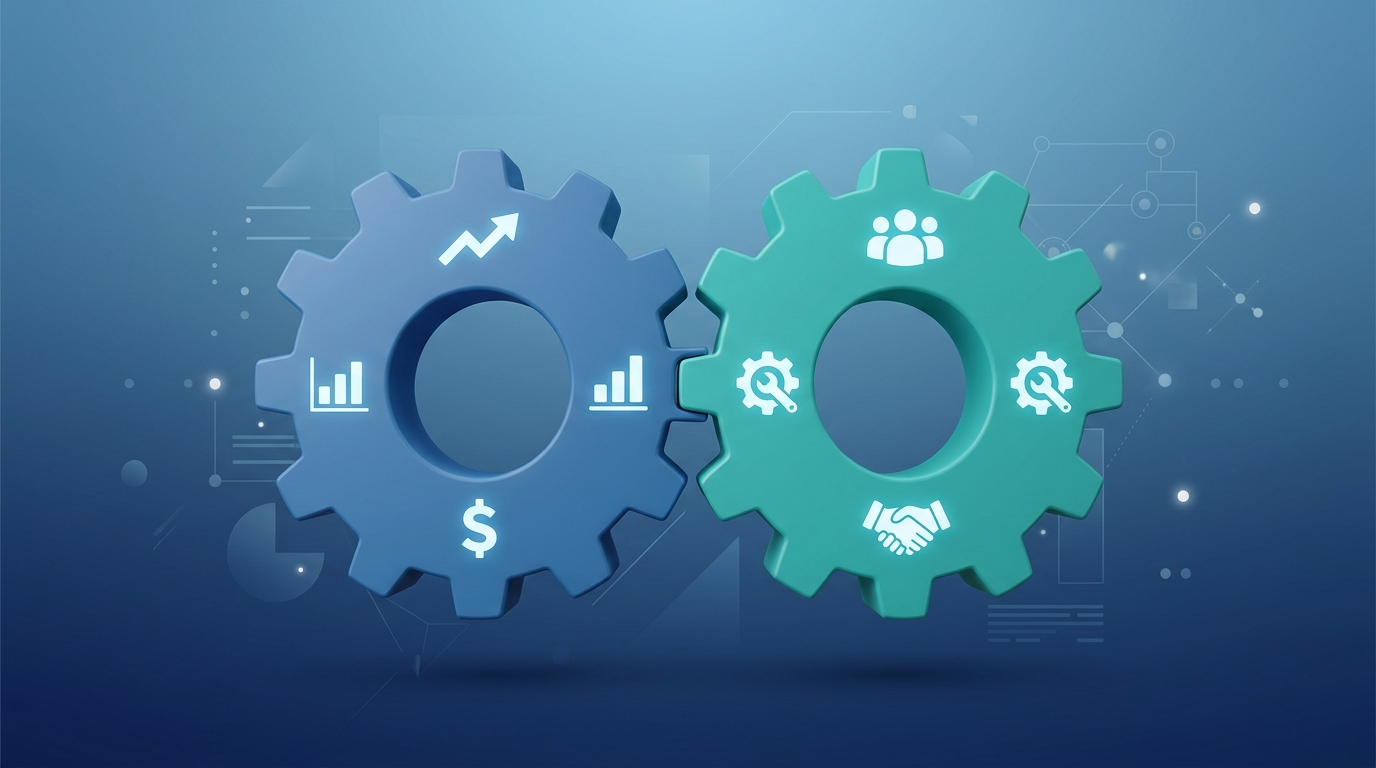
Everything starts here. If you don't know where the business is going, you can't plan the workforce to get there.
Translate Business Goals Into Workforce Implications
Get specific about three things with your leadership team:
1. Revenue targets for the next 2-3 years. Not just top-line growth, but how it happens. New products? Geographic expansion? Moving upmarket? Each requires different talent profiles.
2. Operational model changes. Platform shift? Services arm? Remote-first? These changes reshape which roles matter and where they sit.
3. Technology bets. AI, automation, and tooling changes don't just create new roles. They eliminate existing ones.
The Output
A one-page document that maps each major business initiative to its workforce implication. "Expanding into EMEA in 2027 requires a regional sales team of 8-12, a local HR presence, and legal/compliance support."
For Finance teams running this exercise, every strategic initiative should carry a people cost estimate alongside its revenue projection.

Step 2: Assess Your Current Workforce
You can't plan where you're going if you don't know what you have. A current-state workforce assessment goes beyond an org chart and headcount number.
Three Dimensions to Assess
Skills inventory. What capabilities exist in your current workforce? Not job titles. Actual skills. A "Senior Product Manager" at one company might have deep data analytics skills. At another company, that same title might be purely a stakeholder management role. Titles lie. Skills tell the truth.
Workforce demographics. Age distribution, tenure distribution, and retirement projections matter for planning. If 30% of your engineering leadership is within five years of retirement, that's a strategic workforce risk you need to plan for now.
Performance and potential. Who are your high performers? Who has the potential to grow into leadership roles? This feeds directly into your build-vs-buy talent decisions.
Don't Boil the Ocean
For mid-market companies, this assessment doesn't need to be a six-month project. Start with your top 50-100 roles where a vacancy creates real business disruption. Assess skills, bench strength, and flight risk for those roles first.
This is where headcount governance becomes critical. Governance gives you the accountability layer to ensure your workforce assessment translates into enforceable decisions, not just a slide deck that collects dust.
Step 3: Identify Future Workforce Gaps
With your business strategy mapped and your current workforce assessed, the gap analysis becomes straightforward. It's a comparison: here's what we'll need, here's what we have, and here's the delta.
The Gap Matrix
Build a simple matrix with four quadrants:
Build: Skills we need that we can develop internally through training, stretch assignments, or career pathing. This is your lowest-cost option but takes the longest.
Buy: Skills we need to acquire through external hiring. This is faster but more expensive, and it introduces onboarding and cultural integration risk.
Borrow: Skills we need temporarily that can be contracted or consulted in. Good for project-based needs or capabilities you're still evaluating.
Automate: Work that can be eliminated through technology, process improvement, or AI. Gartner's 2026 predictions emphasize that CHROs need to develop "now-next" talent strategies for a blended human-machine workforce. Ignoring automation in your gap analysis means overplanning headcount.
Quantify the Gaps
For each gap, estimate the number of positions, the timeline for when you'll need them, and the cost. "We need 6 ML engineers by Q2 2028 at an average fully loaded cost of $285,000 each" is actionable. "We need more AI talent" is not.
Scenario modeling becomes essential here. Your gap analysis should include at least a base case and a conservative case, because business strategy shifts and your workforce plan needs to flex with it.
Step 4: Build the Workforce Action Plan
The action plan turns your gap analysis into a sequenced set of initiatives with owners, timelines, and budgets.
Four Categories of Action
Hiring plans. For the "buy" gaps, build a multi-year hiring plan that sequences roles by priority and maps them to budget cycles. This is where your strategic plan connects to your annual tactical headcount plan.
Development programs. For the "build" gaps, identify specific training, mentoring, or rotation programs. Tie each program to a measurable outcome. "Move 8 mid-level engineers to staff-level capability within 18 months through our technical leadership program."
Contingent workforce strategy. For the "borrow" gaps, define the criteria for when you'll use contractors vs. full-time employees. It's about which capabilities are core to your business and which are supporting functions.
Succession planning. For your critical roles, who steps in when someone leaves? If the answer is "we'd have to go external," that's a gap in your action plan.
Connect to Budget Cycles
Each initiative should have a cost estimate and a proposed funding source. This is where strategic workforce planning stops being an HR exercise and becomes a financial planning discipline.
For growing companies, this connection is exactly what headcount governance is designed to enforce. Without governance, the strategic plan lives in a slide deck while the annual budget tells a completely different story.
Step 5: Monitor, Adjust, and Govern
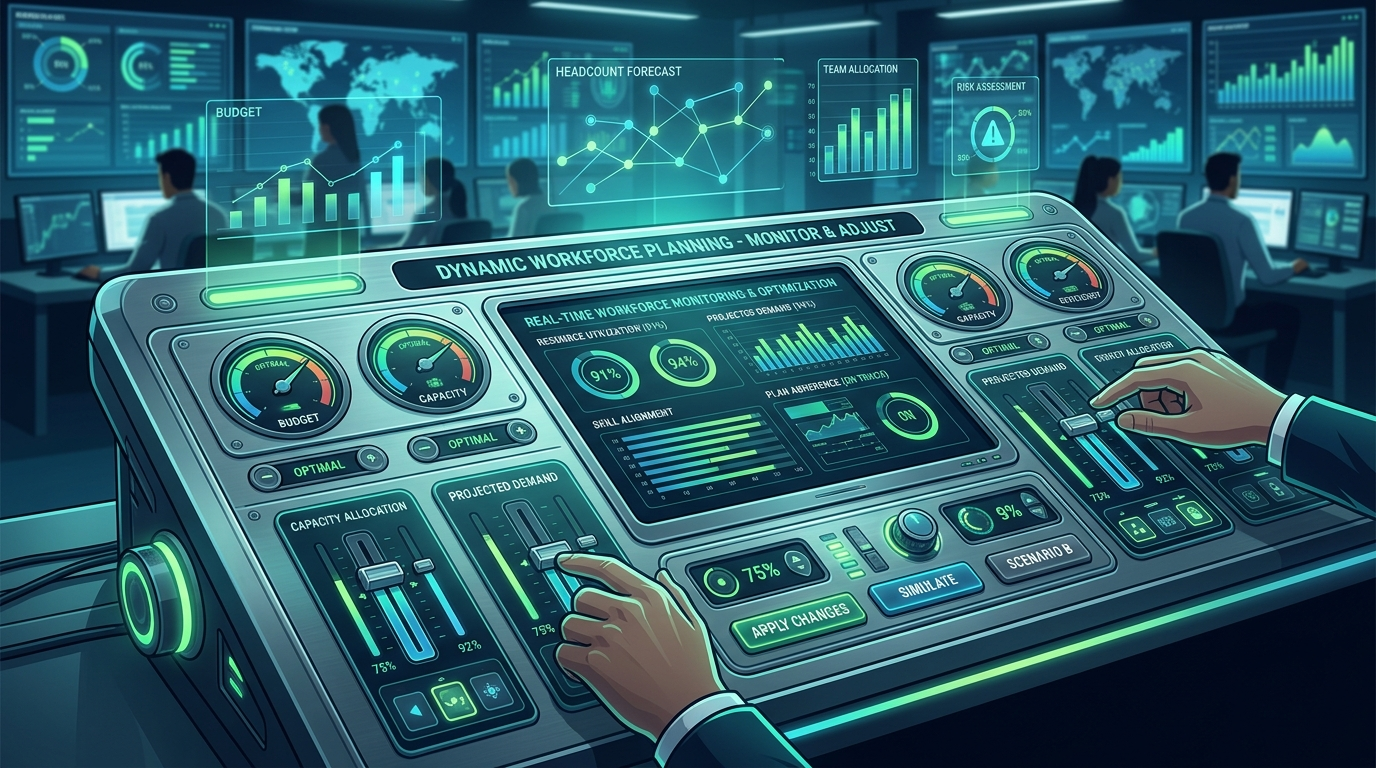
A strategic workforce plan isn't a document you create once a year. It's a living system that needs regular review and adjustment.
Quarterly Reviews
Every quarter, revisit three questions:
1. Has the business strategy changed? If yes, update your workforce implications and gap analysis.
2. Are we on track with our action plan? Check progress on hiring, development, and succession initiatives.
3. What external factors have shifted? Labor market conditions, compensation benchmarks, competitive dynamics, and regulatory changes all affect your plan.
The Metrics That Matter
Track a small set of leading indicators:
Time to fill for critical roles: If it's trending up, your hiring plan may be unrealistic.
Internal mobility rate: Are you successfully developing internal talent, or are you defaulting to external hiring for every gap?
Workforce cost as a percentage of revenue: Is your people investment scaling efficiently as the company grows?
Attrition in critical roles: Losing the wrong people at the wrong time can unravel your entire workforce strategy.
The Governance Connection
Here's what separates success from shelf-ware: governance. Strategic workforce planning sets the direction. Headcount governance enforces it. Who approves new positions? Who reviews the plan quarterly? Who is accountable when hiring deviates from the strategy? Without that enforcement, your strategic plan is aspirational at best.
Can Strategic Workforce Planning Work Without a Dedicated Team?
Yes, and for mid-market companies, it has to. Assign ownership to a senior HR leader and a senior Finance leader jointly. They co-own the plan, co-lead the quarterly reviews, and co-present to the executive team. Strategic workforce planning lives at the intersection of people strategy and financial strategy. Neither function can own it alone.
For companies under 500 employees, a well-built spreadsheet can handle the annual process. Beyond that, the manual effort of maintaining the connection between your HRIS, your financial model, and your workforce plan becomes the bottleneck. The Kinnect platform was built for exactly this transition point.
How Often Should We Update Our Strategic Workforce Plan?
Annually for the full plan. Quarterly for the review and adjustment cycle. Monthly for the tactical execution. The cadence matters less than the discipline. A quarterly review that actually happens is more valuable than a monthly review that gets cancelled because "things are too busy."
Conclusion
Strategic workforce planning doesn't require a consulting engagement or a dedicated team of analysts. It requires five things: alignment to business strategy, an honest assessment of your current workforce, a clear gap analysis, an actionable plan, and the governance to enforce it.
The 85% of organizations that skip strategic workforce planning aren't doing it because the concept is wrong. They're skipping it because the execution model hasn't been accessible for mid-market companies. That's changing. The companies that connect their workforce strategy to their financial reality, and govern the execution, will outperform those that keep hiring reactively.
Book a demo with Seena to see how Kinnect connects strategic workforce planning to headcount governance so your plan actually becomes reality.