
Why Your Headcount Number Is Wrong (And How to Fix It)
I was at Slack, halfway through a message, when the calendar invite popped up: "Board Prep Sync, Urgent." No agenda. No context. Just a meeting in 15 minutes with the CFO, CHRO, and VP of Talent.
I grabbed my laptop and walked in expecting a quick data pull. Instead, I walked into a question that changed how I think about headcount infrastructure.
The CFO looked around the room and asked: "What's our headcount?"
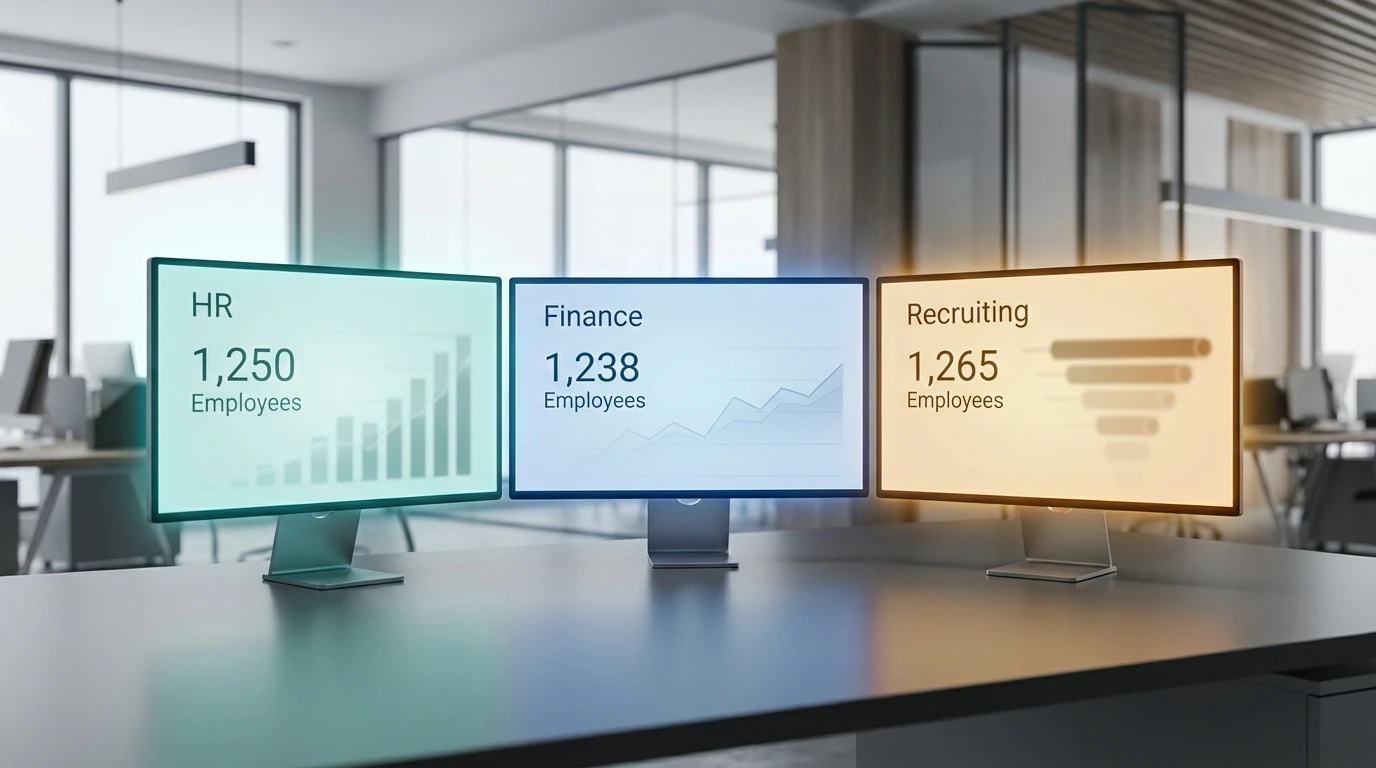
Simple question. Three answers.
The CHRO pulled up Workday. "512."
The VP Finance checked Adaptive Planning. "487."
The VP Talent opened the ATS dashboard. "We have 498 active roles."
The CFO looked at me. I owned the systems. "Seena, which number is right?"
The honest answer: all of them. And none of them.
Each number was accurate in its own system, using its own definition, at its own point in time.
That's the headcount reconciliation problem. Not a rounding error. Not a data quality issue. A structural gap.
Is your headcount data telling you three different stories? Download the Headcount Reconciliation Diagnostic to score your organization across 4 critical dimensions. Or book a demo with Seena.
Why Every Department Has a Different Headcount Number
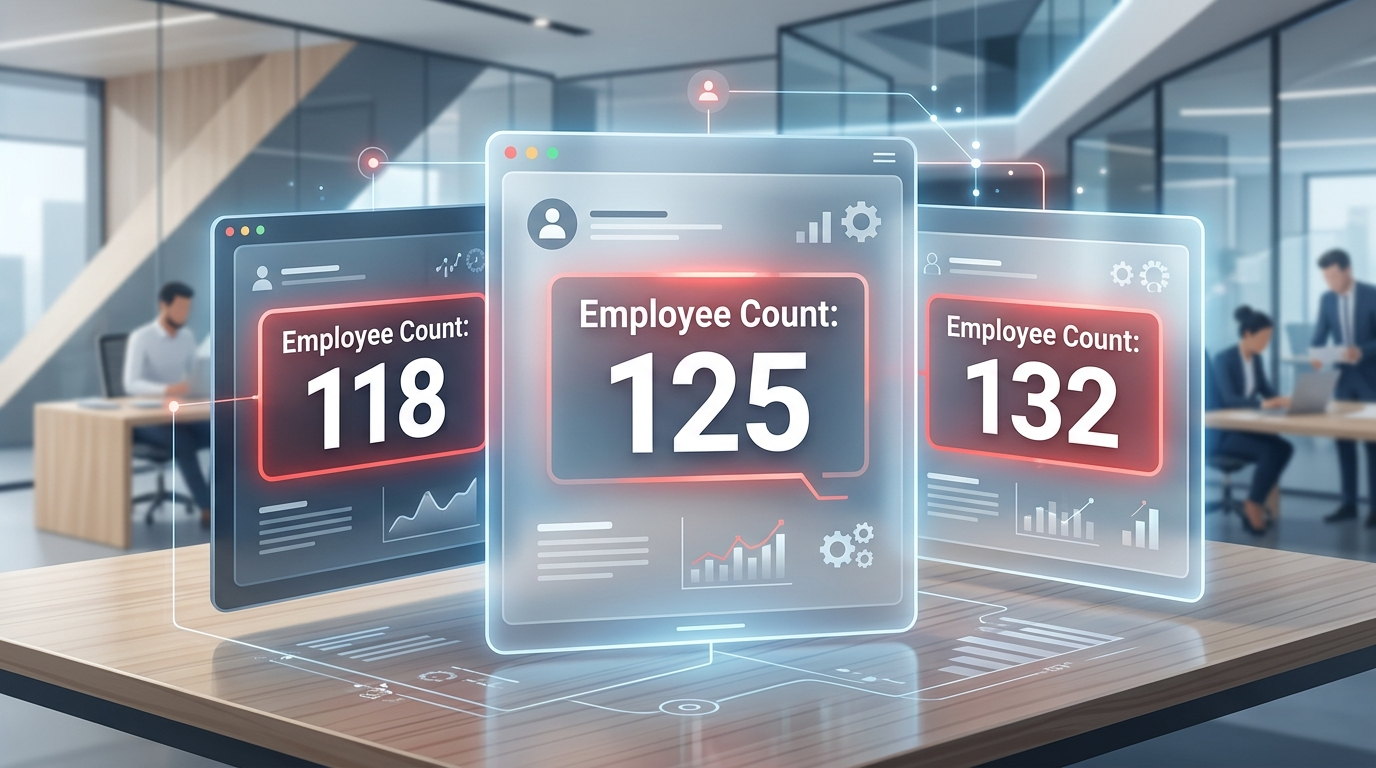
The "487 vs. 512" problem isn't caused by carelessness. It's caused by architecture.
Finance, HR, and Recruiting each rely on different systems built for different purposes. Those systems weren't designed to share a common definition of headcount. They weren't designed to update at the same cadence. And they definitely weren't designed to reconcile with each other automatically.
Different Systems, Different Definitions
Finance counts funded positions. That's the number tied to the budget, the forecast, and the plan the board approved. If a position isn't in the financial model, it doesn't exist in Finance's world.
HR counts filled and open positions. That's the workforce as it appears in the HRIS: active employees, open roles, employees on leave, pending start dates. HR's count reflects organizational reality, not just what's funded.
Recruiting counts active requisitions. That's the pipeline: roles with approved reqs, roles being sourced, roles in interview stages. Recruiting's number reflects execution momentum, not headcount state.
Each definition is valid. Each is accurate within its own system. But when you put all three in a room and ask "What's our headcount?", you get three answers that can't be reconciled without a shared framework.
Gartner research confirms this is pervasive: 72% of HR and Finance teams don't have shared systems for workforce planning. That's not a statistic about technology adoption. That's a structural reality about how organizations manage their largest expen
Different Timestamps
Even if Finance, HR, and Recruiting agreed on a definition, their systems update at different intervals. The HRIS might reflect last Friday's payroll run. The financial model might reflect last month's planning cycle. The ATS updates in real time as recruiters move candidates through stages.
Ask all three teams for the headcount number on the same Tuesday afternoon, and you'll get numbers that represent three different points in time. That's not a bug. That's how these systems were built. They were designed to serve their primary function, not to stay synchronized with each other.
When those numbers land in the same board deck, the discrepancy looks like incompetence. It's not. It's the predictable outcome of running workforce data through systems that were never designed to agree.
For more on this, read about Workday integration architecture and the technical approach to building a single source of truth..
The Five Root Causes of Headcount Data Discrepancies
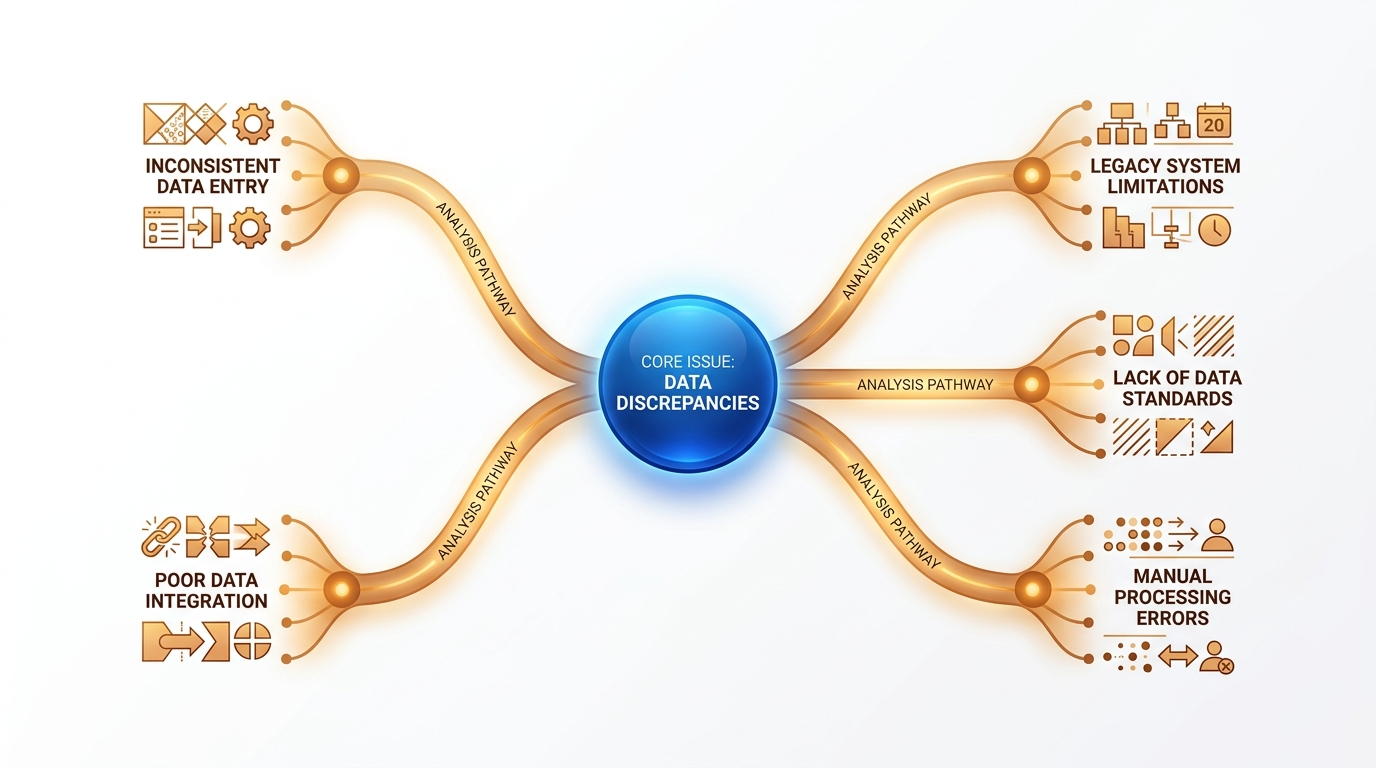
The "which number is right?" problem shows up in board meetings, but its root causes live deep in how organizations structure their headcount data. After building and fixing these systems at Google, Slack, and Coinbase, I've found that headcount discrepancies trace back to five specific root causes.
Root Cause 1: Definition Mismatch
This is the most common and most underestimated source of discrepancy.
"Headcount" means different things to different teams. Finance often tracks FTEs (full-time equivalents), which converts part-time and contract workers into fractional headcount. HR tracks headcount as individual people, regardless of hours worked. Recruiting tracks positions or requisitions, which may or may not map one-to-one to headcount.
A department with 50 full-time employees, 10 part-time employees (0.5 FTE each), and 5 contractors looks different depending on who's counting:
Finance (FTEs): 55 (50 + 5 from part-time, excluding contractors)
HR (headcount): 65 (all individuals on the HRIS)
Recruiting (open reqs): Shows whatever is active in the ATS
Nobody's wrong. But nobody agrees. And until you establish a single definition that all teams use, every reconciliation effort is a translation exercise.
Root Cause 2: System Fragmentation
The average enterprise runs workforce data across three or more disconnected systems: an HRIS like Workday for employee records, an ATS like Greenhouse for recruiting, and an FP&A tool like Adaptive Planning for budgeting and forecasting.
Each system is a walled garden. Data enters each system through different interfaces, managed by different teams, on different schedules. The HRIS is HR's system of record. The ATS is Recruiting's system of record. The FP&A tool is Finance's system of record.
Three systems of record means zero systems of record for headcount.
Kinnect connects directly to Workday and Greenhouse through no-code integrations, creating a single governance layer across all three systems. The goal isn't to replace your systems. It's to connect them so they produce one number instead of three.
Root Cause 3: Timing Gaps
Systems update at different intervals, and those intervals create discrepancies that look like errors but are actually lag.
An employee gives two weeks' notice on Monday. HR processes it in Workday by Wednesday. Finance's model won't reflect the change until the next planning cycle, which might be weeks away. Meanwhile, a backfill req opens in the ATS on Thursday.
For a window of time, the HRIS shows the departing employee and the open backfill. Finance's model still shows the original headcount. The ATS shows a new req. Pull a report during that window, and you'll get a number that's different from every other system.
This isn't a failure of process. It's a failure of infrastructure. When systems don't update in sync, timing gaps are inevitable.
Root Cause 4: Manual Reconciliation Introduces Errors
Most organizations attempt to solve the headcount reconciliation problem with spreadsheets. Someone on the HR or Finance team exports data from each system, pastes it into a shared worksheet, and manually identifies discrepancies.
This process is slow, error-prone, and immediately stale. The moment the spreadsheet is "reconciled," reality has already moved on. New hires are processing. Departures are being entered. Reqs are opening and closing.
Deloitte research shows that 41% of daily work is wasted on manual tasks driven by poor tooling and fragmented systems. In headcount reconciliation, that waste is concentrated in the hands of the people who can least afford to lose the time: senior HR analysts and Finance partners responsible for headcount accuracy.
Organizations using Kinnect report 100% elimination of manual data reconciliation between systems. That's not a marginal improvement. That's reclaiming hundreds of hours per year.
Root Cause 5: No Single System of Record with Enforcement Authority
This is the root cause underneath all the others.
Most organizations don't have a single, authoritative source for headcount data. They have multiple systems, each of which is authoritative in its own domain, with no governance layer connecting them.
A system of record without enforcement authority is just a database. It can store data accurately, but it can't prevent other systems from contradicting it. True headcount reconciliation requires a system that doesn't just hold the data but enforces consistency across all the systems that touch headcount.
That's what headcount governance provides: not just a single number, but a single, enforced number that every team trusts because every team contributed to it and every system reflects it.
How severe is your reconciliation gap? Take the Headcount Reconciliation Diagnostic and score your organization across 20 questions in 10 minutes. Or book a demo with Seena to see how Kinnect eliminates discrepancies at the source.

What Headcount Reconciliation Actually Requires
Most organizations I've worked with have tried to fix reconciliation at some point. They've built spreadsheets, assigned ownership, scheduled weekly sync meetings. And they've watched the problem persist. Here are the questions I get asked most often.
Can You Reconcile Headcount Without Replacing Your Systems?
Yes. And you should.
The goal of headcount reconciliation isn't to rip out Workday, Greenhouse, or Adaptive Planning. Those are purpose-built tools that serve critical functions. The goal is to add a reconciliation layer that connects them.
Think of it this way: your HRIS, ATS, and FP&A tools are the engines. Reconciliation infrastructure is the transmission that connects them so they drive in the same direction.
Kinnect sits on top of your existing systems, connecting Workday, Greenhouse, and your planning tools through no-code integrations. Nothing gets replaced. Everything gets connected.
Kinnect customers save $75,000+ annually on integration costs alone because they don't need custom middleware or consultant-built connectors to keep their systems in sync.
How Often Should Headcount Data Be Reconciled?
Continuously. Not monthly. Not weekly. Continuously.
Monthly reconciliation is an autopsy. You're examining what already went wrong. Weekly reconciliation is better, but it still leaves five-day windows where discrepancies accumulate and decisions get made on stale data.
Real-time reconciliation means the data is always current, always consistent across systems, and always available. When someone asks "What's our headcount?", the answer takes seconds because the systems are already in sync.
Organizations that move from monthly to real-time reconciliation report an 89% reduction in reconciliation time. That's not because they got faster at spreadsheets. It's because they eliminated the spreadsheets entirely.
Who Owns the Headcount Number?
This is the question nobody wants to answer, and it's the most important one.
In most organizations, headcount ownership is distributed. Finance owns the budget. HR owns the employee records. Recruiting owns the pipeline. Nobody owns the reconciled number that connects all three.
The answer isn't to assign ownership to one team and make the others subordinate. That creates bottlenecks and political tension. The answer is to build infrastructure where the reconciled number is a product of all three systems working together, governed by shared rules.
When Kinnect connects your HRIS, ATS, and FP&A tools, the headcount number isn't "owned" by Finance or HR or Recruiting. It's produced by the governance layer that enforces a single definition across all three. Nobody owns it because everybody owns it. And everybody trusts it because nobody had to sacrifice their data to get it.
For more on how this works in practice, read about common headcount management mistakes and the structural patterns that keep reconciliation broken.
The Real-Time Reconciliation Framework
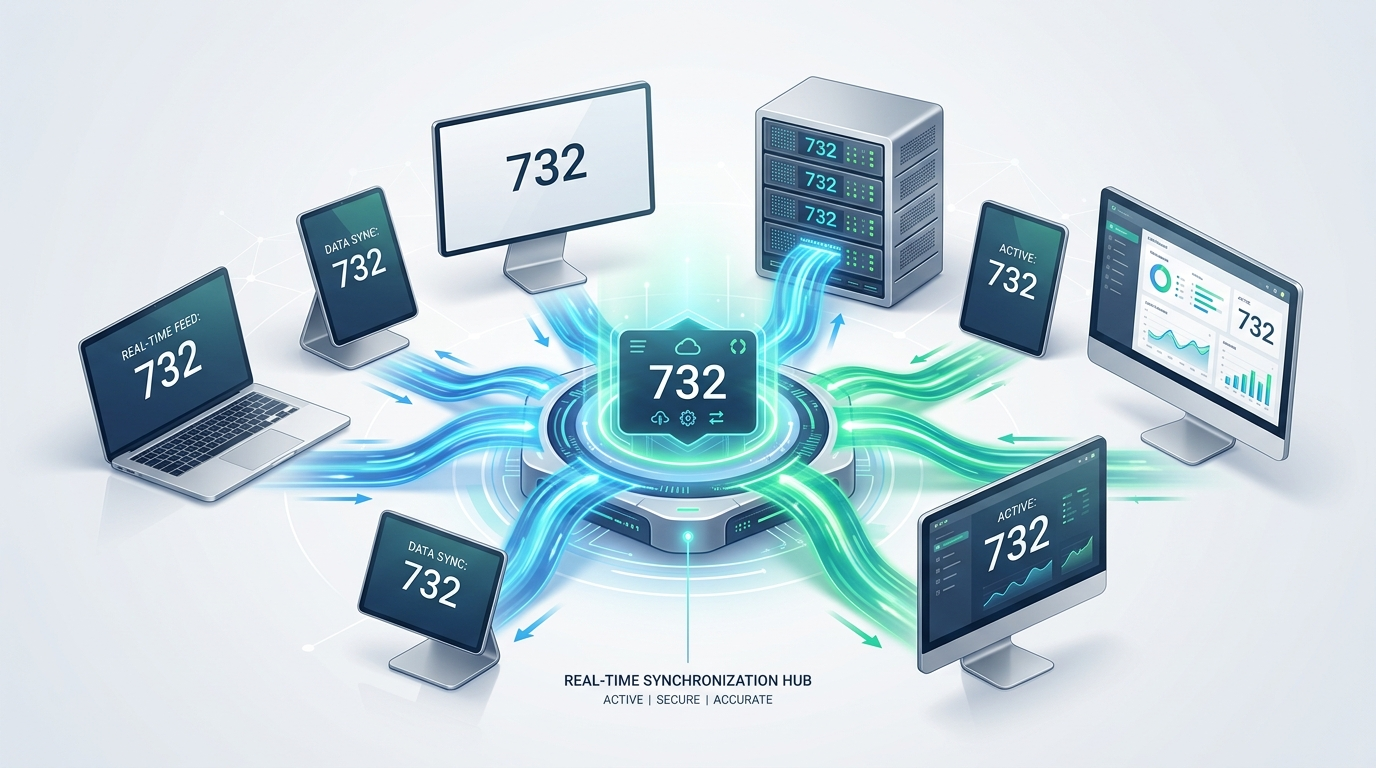
Knowing why headcount numbers disagree is useful. Fixing it requires a framework. Here's the four-part approach I've used at every organization I've worked with, refined into what we built at Kinnect.
Step 1: Connect HRIS, ATS, and FP&A Tools to a Single Governance Layer
Stop treating your systems as independent data stores. Connect them through a governance layer that maintains a single, consistent view of headcount across all three.
This doesn't mean building custom integrations. Custom integrations are expensive, fragile, and create their own reconciliation problems when they break. It means using purpose-built infrastructure designed to sit between your systems and enforce data consistency.
At Slack, I spent months building custom integrations between Workday and our recruiting tools. They worked until they didn't. An API change, a field mapping update, a new business process in Workday, and suddenly the integration was producing bad data. Nobody noticed for two weeks.
That experience is why Kinnect uses no-code integrations that maintain themselves. When your HRIS or ATS updates, the integration adapts. No IT tickets. No maintenance backlog. No two-week windows of bad data.
Step 2: Automate Data Flow (No Manual Exports or Imports)
Every manual handoff is an opportunity for error and delay. When headcount data moves between systems through CSV exports, email attachments, or copy-paste into spreadsheets, errors are inevitable.
Automated data flow means: when a position is approved in your governance layer, it appears in your ATS automatically. When a hire is made in your ATS, the position updates in your HRIS automatically. When a departure is processed in your HRIS, the budget impact reflects in your FP&A tool automatically.
No exports. No imports. No "Can you send me the latest headcount file?"
This is where Kinnect customers see the most immediate impact. That 100% elimination of manual reconciliation happens because data flows automatically between systems. The Monday morning spreadsheet ritual disappears in the first week.
Step 3: Enforce One Definition of Headcount Across All Teams
Pick a definition. Write it down. Enforce it in the system.
Does headcount include contractors? Part-time employees? Employees on leave? Funded but unfilled positions? Whatever your organization decides, that definition needs to be encoded in the governance layer so every system counts the same way.
This sounds basic, but it's the step most organizations skip. They connect systems without aligning definitions, and then wonder why the numbers still don't match. Connection without shared definitions is just faster disagreement.
Step 4: Continuous Reconciliation, Not Monthly Snapshots
Monthly snapshots are a coping mechanism, not a solution. They tell you what the data looked like at one point in time. They don't tell you what it looks like right now.
Continuous reconciliation means the governance layer is constantly comparing data across your HRIS, ATS, and FP&A tools, flagging discrepancies the moment they appear, and resolving them before they compound into the "487 vs. 512" debate.
McKinsey research found that 40 to 65% of management time is wasted on planning coordination. Continuous reconciliation eliminates the coordination tax around headcount data. When the systems agree in real time, nobody spends meetings debating whose number is right.
Explore the full unified platform to see how these four steps connect into a single headcount governance workflow.
Ready to fix your headcount number? Download the Headcount Reconciliation Diagnostic to find where your data breaks down. Or book a demo with Seena.

From "Which Number Is Right?" to "The Number Is Always Right"
The organizational impact of solving headcount reconciliation goes beyond accurate data. It changes how Finance, HR, and Recruiting work together.
Trust Between Finance and HR
The trust gap between Finance and HR on headcount is one of the most corrosive dynamics I've seen in organizations. It's not personal. It's structural. When Finance and HR produce different numbers every month, trust erodes regardless of how competent both teams are.
Solving reconciliation eliminates the conditions that create distrust. When both teams look at the same number from the same source, the conversations shift from "whose number is right?" to "what should we do about it?" That's a fundamentally different meeting.
Deloitte reports that 34% of finance leaders are taking a larger role in hiring decisions. That trend is healthier when Finance and HR trust the same data. Without shared data, Finance's involvement feels like oversight. With shared data, it feels like partnership.
Recruiter Confidence in Their Pipeline
When recruiters work from funded, approved requisitions, their confidence changes. They're not wondering whether a req will get pulled mid-process. They're not sourcing for roles that may never get budget sign-off. Every position in their pipeline is real, funded, and approved.
That confidence translates directly into performance. Kinnect customers report a 30% improvement in hiring efficiency because recruiters spend their time on roles that will actually result in hires, not on ghost reqs that waste everyone's time.
Board-Ready Reporting on Demand
When reconciliation is continuous, board-ready reporting becomes a byproduct of the system, not a separate workstream. You don't spend two days pulling data, reconciling it, and formatting it into slides. You open the dashboard and the numbers are there, accurate and current.
This matters more than most organizations realize. Board meetings should be about strategy, not data validation. When the CFO can pull headcount data in seconds and trust that it's accurate, the conversation moves from "let me check that number" to "here's what we should do about it."
The Cost of Staying Misaligned
Let me put specific numbers on what reconciliation failure costs.
If your team spends 20 hours per week on manual headcount reconciliation at a blended rate of $75/hour, that's $78,000 per year in direct labor costs. Kinnect customers report 89% reduction in reconciliation time, reclaiming the vast majority of those hours.
But the direct cost is the smallest part. The real cost is in the decisions made on bad data: the budget surprises at quarter-end, the recruiters investing weeks in unfunded positions, the board meetings derailed by data validation instead of strategy.
Headcount represents 60 to 70% of operating expense. Managing it across disconnected systems with manual reconciliation isn't a minor operational inefficiency. It's a strategic liability.
The organizations that build reconciliation infrastructure now will answer "What's our headcount?" in seconds, trust the answer, and move on to the decisions that matter. The organizations that keep reconciling in spreadsheets will keep having the same meeting every Monday morning, debating the same numbers, and hoping nobody notices the discrepancy in the board deck.
The question isn't whether reconciliation is broken. If you've read this far, you already know it is. The question is how long you can afford to keep it that way.

Stay ahead of headcount governance trends. Subscribe to the Kinnect newsletter for insights on headcount planning, workforce governance, and position management from operators who've been in the trenches. Subscribe