
4 Proven Best Practices for Workday Headcount Planning

Effective headcount planning should be your organization's cornerstone for strategic workforce planning, budget management, forecasting, and talent acquisition.
But instead, for many Workday customers, it's become a battlefield where HR, Finance, and Recruiting teams wage constant data wars. Headcount requests get approved without proper budget validation, FTE numbers differ between your HRIS and financial planning systems, and quarterly reconciliation becomes a nightmare of spreadsheets and conflicting reports that consume weeks of valuable time.
But it doesn't have to be this way.
After supporting 40+ successful Workday implementations across organizations of all sizes, we've discovered that effective Workday headcount planning transcends basic headcount software. It requires a unified cross-functional approach, seamless Workday integration, and real-time data synchronization across your entire tech stack.
In this guide, we'll share four transformative best practices that will help you overcome common Workday headcount planning challenges and turn this critical function into a strategic advantage for your organization.
Understanding Workday Headcount Planning
Headcount planning is the strategic process of forecasting, budgeting for, and managing your organization's workforce needs across the entire employee lifecycle. Unlike position management (which focuses on organization structure), comprehensive headcount planning encompasses:
FTE forecasting: Projecting future staffing needs based on growth targets
Budget allocation: Assigning financial resources to different departments and roles
Hiring pipeline management: Tracking open requisitions, candidates, and offers
Vacancy management: Monitoring and addressing unfilled positions
Attrition planning: Preparing for and responding to employee departures
Cross-functional alignment: Ensuring HR, Finance, and Recruiting work from the same data
Think of headcount planning as air traffic control for your organization. Multiple "flights" (hiring plans, budget allocations, employee changes) are in motion simultaneously, and every stakeholder (HR, Finance, Recruiting) needs real-time visibility and coordination to avoid costly collisions.
The Workday Headcount Planning Challenge: Data Silos Create Costly Misalignment
The root of most headcount planning frustrations stems from disconnected systems and processes. Finance teams develop annual plans and quarterly forecasts in headcount planning software (like Workday Adaptive Planning), HR teams manage employee data and organizational structure in Workday, and Recruiting teams track candidates and job requisitions in applicant tracking systems (e.g., Greenhouse).
This fragmentation creates critical challenges:
Budget vs. Reality Discrepancies: Finance approves headcount during annual planning, but by the time positions are created in Workday and requisitions opened in your ATS, the approved budget no longer matches actual needs.
Time-to-Fill Visibility Gaps: Finance allocates budget assuming immediate hiring, but Recruiting knows positions will take months to fill. Without shared visibility, this creates significant variance in personnel expense forecasts.
Manual Reconciliation Overhead: HR Operations teams waste countless hours manually reconciling headcount data between systems, creating spreadsheets that are outdated almost immediately.
Decision-Making Delays: Leaders can't make confident hiring decisions when Finance, HR, and Recruiting data tell different stories about current headcount status.
Organizations that overcome these challenges typically implement integrated headcount management tools that connect their various systems, creating a more synchronized approach to headcount management.
4 Transformative Workday Headcount Planning Best Practices
Based on our experience with dozens of Workday implementations, we've identified four critical best practices that transform Workday headcount planning from a fractured, frustrating process into a strategic advantage.
1. Establish a Cross-Functional Headcount Planning Framework
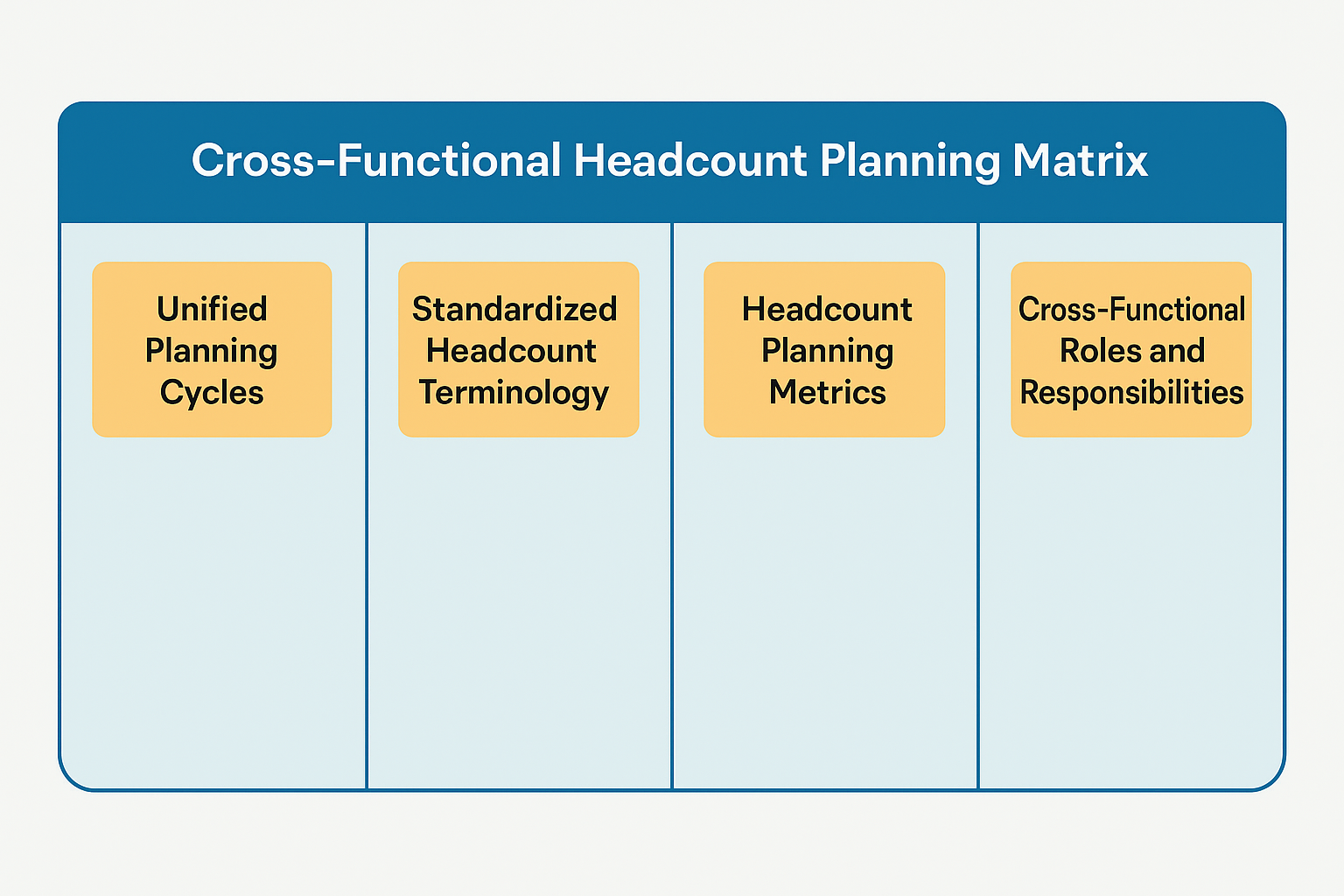
Effective headcount planning requires a comprehensive framework that aligns all stakeholders around common processes, terminology, and timelines. This framework must address:
Unified Planning Cycles - Define clear timelines for annual headcount planning, quarterly reviews, and ad-hoc request processes. For example:
Annual Planning (Q4): Finance sets overall headcount targets and budget
Quarterly Reviews: Adjust forecasts based on actual hiring, attrition, and business changes
Monthly Reconciliation: Ensure HRIS, ATS, and finance systems remain aligned
Ad-hoc Requests: Process for mid-year headcount changes or additions
Standardized Headcount Terminology - Create consistent definitions across departments for terms like:
Approved headcount
Current headcount
Open headcount
Contingent vs. full-time equivalents (FTEs)
Backfills vs. new headcount
Requisition status categories
Headcount Planning Metrics - Establish key performance indicators (KPIs) that measure the health of your headcount planning process:
Headcount variance (planned vs. actual)
Time-to-fill by department/role
Cost-per-hire against budget
Requisition aging
Hiring plan attainment
Forecast accuracy
Cross-Functional Roles and Responsibilities - Clearly define who owns which aspects of the headcount planning process:
Finance: Budget allocation, forecast management, variance analysis
HR: Employee data integrity, organizational structure, internal mobility
Recruiting: Requisition management, candidate pipeline, time-to-fill projections
Hiring Managers: Headcount requests, interview process, selection decisions
Modern headcount planning solutions like Kinnect support this framework by providing centralized platforms where all stakeholders can access consistent headcount data, review real-time metrics, and collaborate throughout the planning cycle.
2. Implement Clear Ownership for Each Stage of the Headcount Lifecycle
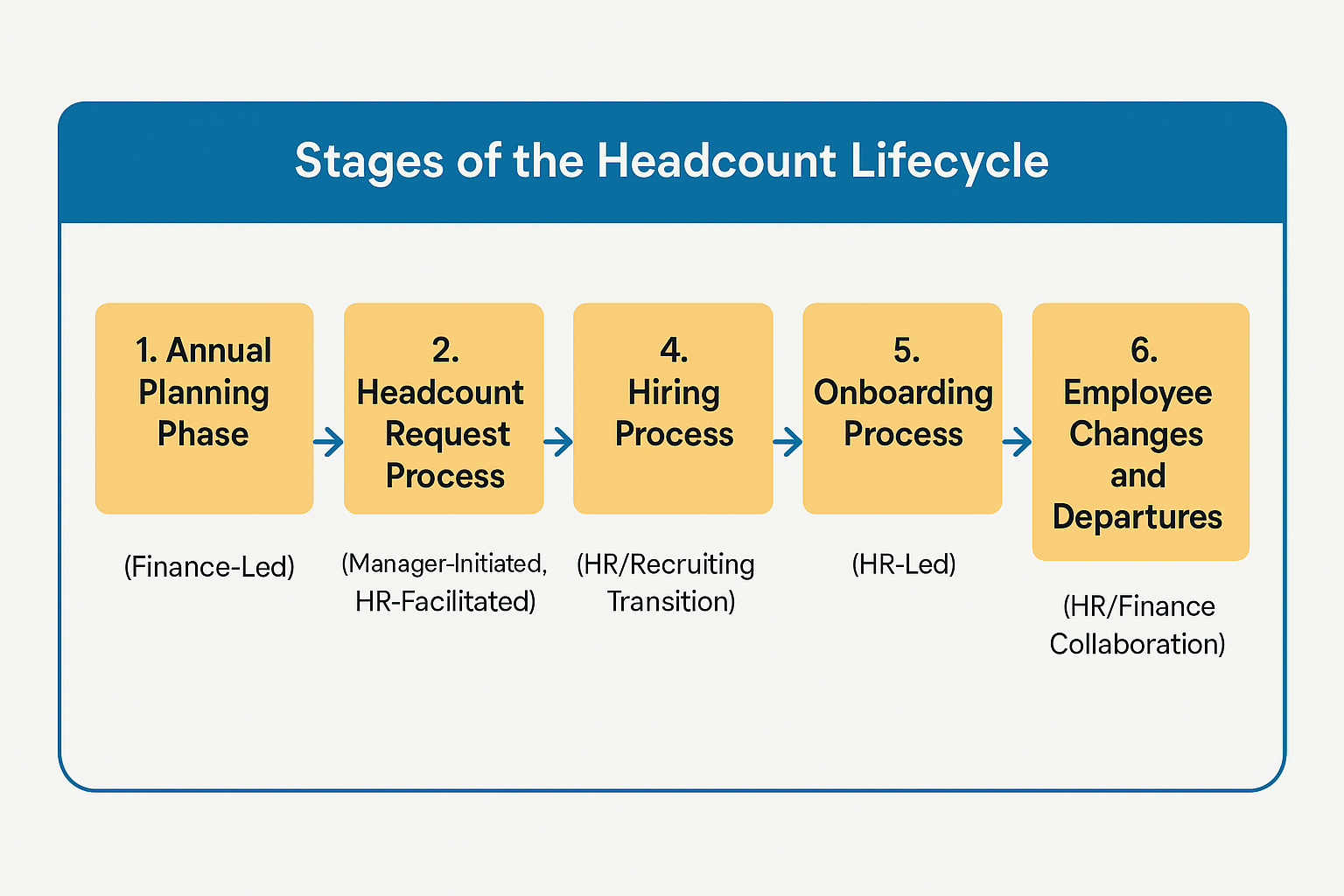
Successful headcount planning requires precisely defined ownership at each stage of the employee lifecycle. This clarity prevents the common scenario where headcount requests fall into a black hole between departments.
Here's a breakdown of how ownership should flow through the complete headcount lifecycle:
Annual Planning Phase (Finance-Led)
Finance establishes overall headcount targets and budget allocations
Department leaders submit headcount needs through structured templates
Executive leadership approves the final headcount plan
Finance publishes approved headcount allocations by department
Headcount Request Process (Manager-Initiated, HR-Facilitated)
Managers submit specific headcount requests through standardized workflows
HR Business Partners validate requests against the approved headcount plan
Finance confirms budget availability
Department leadership approves final requests
Requisition Creation (HR/Recruiting Transition)
HR creates positions in Workday based on approved headcount
System integration synchronizes position data with your ATS
Recruiting creates and publishes job requisitions
Hiring managers approve final job descriptions
Hiring Process (Recruiting-Led)
Recruiting manages candidate pipelines and interview processes
Hiring managers make selection decisions
HR prepares and extends offers
Recruiting updates offer status in the ATS
Data synchronization updates candidate information between ATS and Workday
Onboarding Process (HR-Led)
HR initiates the onboarding workflow in Workday
Systems update headcount status from "open" to "filled"
Finance adjusts personnel expense forecasts based on the actual start date
All systems reflect accurate headcount status in real-time
Employee Changes and Departures (HR/Finance Collaboration)
HR processes promotions, transfers, or terminations in Workday
Automated workflows update the headcount availability status
Finance adjusts forecasts based on changes
Recruiting initiates the backfill process as needed
The most effective organizations implement intuitive workflows that guide each stakeholder through their responsibilities while maintaining data integrity across all systems. Tools like Kinnect can facilitate this ownership flow through the headcount lifecycle.
3. Synchronize Data Across Systems with Automated Integration
The backbone of effective headcount planning is real-time data synchronization between your core systems. Manual data transfer between Workday, your ATS, and financial planning systems is not only inefficient but inevitably leads to errors and inconsistencies.
A comprehensive integration strategy should include:
Bi-Directional Workday Integration: Ensures your HRIS remains the system of record while automatically updating headcount status based on employee lifecycle events, providing real-time visibility and eliminating manual data reconciliation.
Seamless ATS Integration: Creates a continuous flow of data between recruiting and HR systems, automatically connecting approved positions to requisitions and transferring candidate information to Workday without duplicate entry.
Financial Planning System Connectivity: Bridges the gap between budgeted and actual headcount by updating forecasts based on real hiring timelines, providing variance analysis, and eliminating the need for spreadsheet-based reconciliation.
Custom Workflow Automation: Streamlines the entire headcount process from request to approval with automated notifications, integration with communication tools like Slack, and comprehensive audit trails for compliance.
The Benefits of Comprehensive Integration Strategies:
Single Source of Truth: All stakeholders work from the same headcount data, eliminating disputes over "whose numbers are right."
Real-Time Visibility: Leaders can see current headcount status, open requisitions, and budget impact instantly, without waiting for manual reports.
Reduced Administrative Overhead: HR and Finance teams spend less time on data reconciliation and more time on strategic workforce planning.
Improved Forecast Accuracy: Finance can create more accurate personnel expense forecasts based on actual hiring timelines and compensation data.
Faster Decision-Making: With trusted data at their fingertips, leaders can make confident headcount decisions without lengthy verification processes.
While custom integrations are possible, many organizations find that purpose-built solutions like Kinnect provide a more cost-effective way to achieve these benefits without extensive technical resources.
4. Deploy User-Friendly Tools and Data-Driven Insights
Even the most well-designed headcount planning process will fail if users find the headcount management tools difficult to use or the data hard to interpret. Successful headcount planning requires intuitive interfaces, automated workflows, and actionable analytics.
Key elements of an effective headcount planning software approach include:
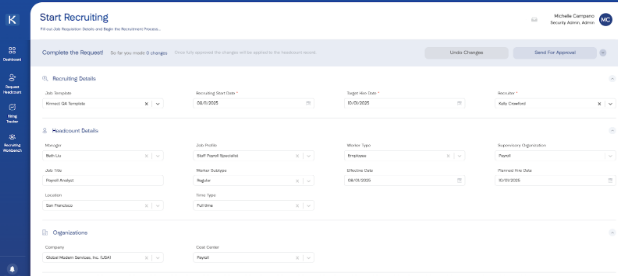
Intuitive User Experience: Provides role-based dashboards and simple workflows that guide users through the headcount process, with mobile-friendly interfaces and integration with everyday tools for seamless adoption.
Collaborative Hiring Tracker: Offers real-time visibility into all positions with pipeline metrics, forecast projections based on historical time-to-fill data, and budget impact analysis to keep all stakeholders aligned.
Automated Notifications and Workflow Actions: Prevents bottlenecks with timely alerts for pending approvals, milestone notifications, escalation workflows, and proactive budget variance warnings.
Actionable Analytics and Reporting: Delivers insights through headcount variance analysis, time-to-fill trending, budget visualizations, and hiring plan attainment metrics that support data-driven decision making.
These headcount tools support data-driven headcount decisions through features like scenario planning, pipeline forecasting, and pipeline allocation optimization. By making these powerful capabilities accessible through user-friendly interfaces, organizations ensure that everyone involved in headcount planning--from executive leaders to hiring managers--can contribute effectively to the process.
Transform Your Headcount Planning Process with Kinnect
Workday headcount planning doesn't have to be the source of friction and frustration it has become in many organizations. By implementing these four best practices and leveraging modern integration solutions, you can transform headcount planning into a strategic advantage.
Kinnect is here to help! Our comprehensive headcount planning tool was designed specifically to solve the headcount planning challenges that HR, Finance, and Recruiting teams using Workday face:
Eliminate expensive, complex integrations with no-code connections between Workday, your ATS, and planning systems that save up to $210K annually on integration costs
Provide a single source of truth that keeps headcount data synchronized across departments and systems
Streamline headcount workflows with intuitive interfaces and Slack integrations that bring processes directly to users
Enable real-time visibility through comprehensive dashboards and reports tailored to each stakeholder's needs
Reduce administrative burden by automating data reconciliation and headcount reporting tasks
The result is a harmonized headcount planning process where Finance, HR, and Recruiting work together seamlessly to achieve organizational goals. Our team of Workday experts is ready to help you implement these best practices and leverage Kinnect to streamline your headcount planning process.
Contact us or book your personalized demo today to learn how Kinnect can help your organization harmonize headcount planning and transform it from a source of frustration into a strategic advantage.
Ready to transform your headcount management? Book a demo with Seena