
From Reactive to Proactive: How Agentic AI Revolutionizes Workday Headcount Management and Workforce Planning

Three weeks into Q3, and your headcount data still doesn't align across systems. Finance sees one set of numbers in their planning tools, HR has different data in Workday, and Recruiting is working from yet another version in their ATS. This common Workday headcount management mistake isn't a technology failure--it's the reality of managing complex workforce data across multiple platforms.
Workday recognizes this challenge and has been actively building toward the future. Their September 2024 launch of Workday Illuminate demonstrated their commitment to AI-powered insights, followed by the February 2025 release of Agent System of Record through the Workday Marketplace. These developments signal Workday's understanding that the future of workforce management lies in intelligent, autonomous systems that can bridge data gaps and provide proactive insights.
As our CEO, Seena Mojahedi, put it, "We're at an inflection point where the traditional 'wait and see' approach to workforce technology is actually becoming the riskier strategy. Agentic AI isn't just another tool in the headcount management toolkit--it's fundamentally rewiring how organizations think about workforce intelligence."
Yes, agentic AI workforce management represents the next evolution--moving beyond traditional automation to systems that don't just process data, but actively monitor, analyze, recommend, and take actions to optimize your workforce strategy. It's the future, it's here now, and we need to understand how it works and utilize it to the full to stay ahead and thrive.
Understanding Agentic AI: Beyond the Buzzwords
When you compare traditional and agentic AI, the key distinction is autonomy and initiative. Traditional AI and automation in headcount management software operate on predefined rules--they automate tasks like routing requisitions for approval or generating scheduled reports when triggered.
Agentic AI functions more like a strategic partner. It understands your workforce objectives, continuously monitors real-time data across systems, and takes initiative to keep your organization aligned with those goals. Think of it as the difference between a workflow engine and a collaborative advisor.
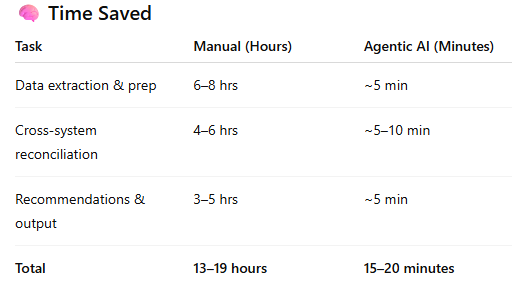
Let's say your Finance team needs to update Q3 headcount forecasts mid-quarter. The traditional approach requires 13-19 hours (a minimum of 2-3 business days) across Finance, Recruiting, and HR teams to extract data from various systems, analyze hiring pipelines, identify risks, and develop recommendations.
With agentic AI, this same analysis completes in approximately 15-20 minutes. The system autonomously:
Accesses current data from Workday
Evaluates hiring pipeline status across recruiting systems
Reconciles against financial plans
Calculates projected impacts
Generates specific recommendations such as strategic hiring adjustments or budget reallocations
Executes those recommendations within defined parameters
Instead of 3 teams spending 2 days pulling and reconciling stale data, Agentic AI flags headcount risks in real time, tells you where to reallocate budget, and gives you the summary slide. It's like adding a full-time workforce analyst to the team--without the headcount.
3 Transformative Use Cases for Agentic AI in Workday Headcount Management
Intelligent Requisition Management and Strategic Alignment
Current challenge: Workday displays open positions without context about their continued relevance, strategic alignment, or relationship to evolving business priorities.
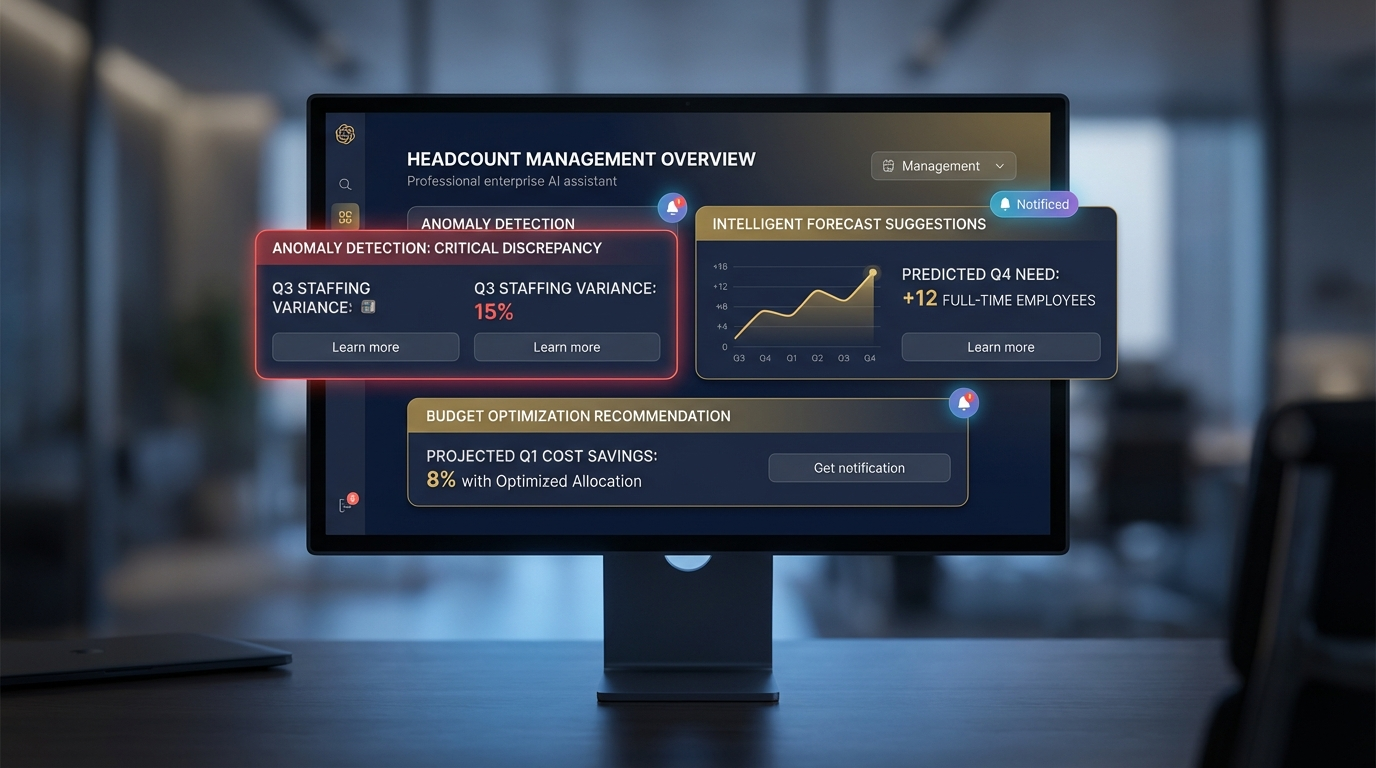
Agentic AI continuously evaluates organizational structure, performance metrics, attrition patterns, and strategic objectives. It identifies open requisitions that may be outdated or redundant and recommends reallocation based on current business needs.
Automated Cross-System Reconciliation and Budget Optimization
The current process of aligning approved headcount, actual hires, and budget allocations across Workday, planning systems, and recruiting platforms typically requires significant manual effort each quarter, costing tens of thousands of dollars per year.
An agentic AI system functions as a continuous reconciliation engine by monitoring data flows between HRIS, financial planning tools, and recruiting systems.
Predictive Workforce Analytics and Strategic Forecasting
Traditional Workday dashboards often act like rearview mirrors--they tell you what has already happened, not what's coming next.
Agentic AI changes this dynamic by:
Monitoring key indicators like hiring velocity, time-to-fill, organizational spans and layers, and churn risk in real time
Generating proactive "talent risk alerts" when patterns emerge
Running impact simulations to forecast downstream effects

The Cross-Functional Impact: Why This Matters for Every Stakeholder
HR - HR teams can shift focus from manual data reconciliation to strategic workforce development.
Finance - Finance teams gain enhanced visibility into hiring velocity, pipeline timing, and budget implications without depending on manual reporting cycles.
Recruiting - Recruiting teams benefit from automated prioritization of critical roles, real-time budget validation, and elimination of efforts on obsolete positions.
Cross-Functional Collaboration - The traditional tension between HR, Finance, and Recruiting often stems from operating with different data sources, timelines, and success metrics. Agentic AI creates a foundation for improved collaboration by ensuring all stakeholders work from consistent, real-time information.
What Leaders Need to Know About AI and Humans in Headcount Management
The most common misconception among leaders is viewing AI implementation as a human replacement strategy rather than a capability enhancement approach. Effective agentic AI workforce management amplifies human expertise by handling data processing, pattern recognition, and routine monitoring so professionals can focus on strategic analysis and decision-making.
The Evolution Toward Conversational Workforce Planning - The most exciting development ahead is AI systems that function as true strategic partners in workforce planning. Imagine querying your system with questions like "What's the optimal timing for our Q4 product team expansion given current pipeline velocity and budget constraints?" and receiving comprehensive strategic recommendations rather than raw data.
We're working towards building these agentic AI functionalities into our comprehensive headcount management software Kinnect so that companies can enjoy even more streamlined, automated Workday headcount management, saving tens and even hundreds of thousands of dollars and hundreds of hours each year.
You Can Stay Ahead of the Agentic AI Revolution in Workforce Planning
The transformation from traditional headcount management to intelligent workforce planning isn't just coming--it's here. Organizations that embrace agentic AI now will gain significant competitive advantages in talent acquisition, budget management, and strategic agility.
At Kinnect, we're building the future of intelligent headcount management that connects seamlessly with Workday while providing the agentic capabilities that transform headcount planning from an administrative burden to a strategic advantage that saves tens of thousands of dollars and hundreds of hours per year.
Ready to explore how agentic AI could revolutionize your workforce planning strategy? Connect with our team today to discuss how intelligent Workday headcount management can transform your organization's approach to talent strategy and budget optimization.
Ready to transform your headcount management? Book a demo with Seena