
Your Guide to Workday Integration With Your ATS for Seamless Headcount Management

Headcount data can deteriorate in as little as 48 hours when your systems aren't properly integrated. This rapid decay creates a ripple effect across your entire organization.
Imagine your headcount management process as a complex ecosystem where Finance, HR, and Recruiting must work in perfect harmony. Yet each team lives in their own specialized environment:
Finance in planning systems (e.g. Adaptive Planning, Anaplan, etc)
HR in Workday
Recruiting in an applicant tracking system (ATS) (e.g. Greenhouse, Ashby, SmartRecruiters, iCims, etc)
Without proper integration, these teams quickly fall out of sync, creating a cascade of problems that impact your entire organization.
Having implemented headcount planning software for dozens of organizations over the past 13 years, we've witnessed the consistent challenges that arise when these critical systems don't communicate effectively. Recruiting teams waste time chasing outdated headcount approvals, Finance makes decisions using last quarter's data, and HR teams exhaust themselves trying to maintain data integrity across disconnected platforms.
Successful headcount management integration isn't merely about technical connections--it's about creating a unified strategy that addresses fundamental questions: How does headcount flow from budgeting to HR systems? Who controls data at each stage? When and how does information transition between systems?
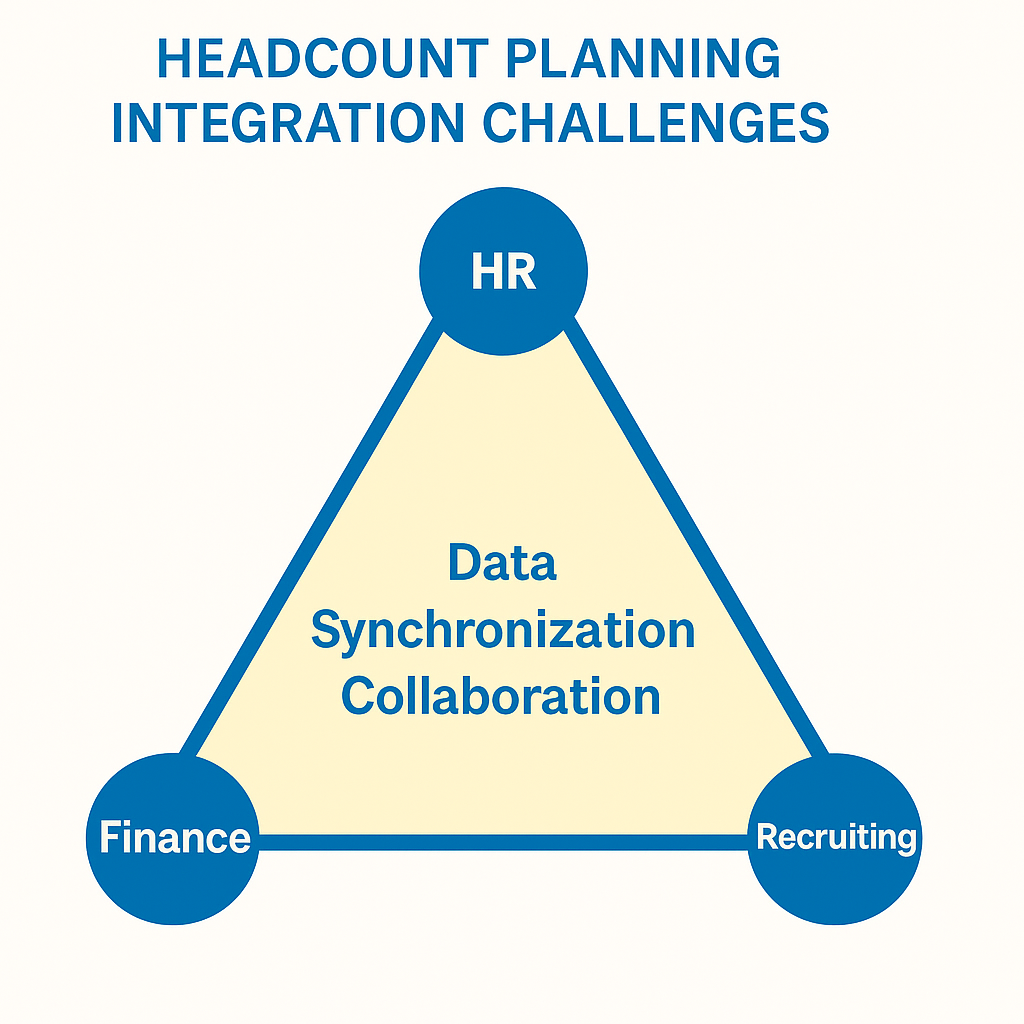
The Three-Dimensional Challenge of Headcount Planning Integration
The Data Synchronization Dilemma:
Master Data Fragmentation: When your Workday foundational data, organizational hierarchies, job profiles, and compensation data aren't consistently reflected in applicant tracking and financial planning systems, your entire headcount planning process becomes unstable.
Requisition Management: The journey from headcount approval to filled position involves multiple handoffs between systems. Without seamless Workday integration, critical information gets lost during these transitions.
Financial Visibility Gaps: Effective headcount management requires real-time financial context.
The Cross-Functional Coordination Challenge:
Misaligned Recruiting Efforts: Recruiting teams waste valuable resources pursuing roles that are no longer priorities or working with outdated compensation parameters.
Inaccurate Financial Forecasting: Finance teams build budgets on flawed assumptions about hiring timelines and compensation trends.
Reactive HR Decision-Making: HR teams spend their time fighting data fires instead of focusing on strategic workforce planning.
Consider this real-world scenario: A technology company received approval to expand its engineering team by 25 positions. Three months and thousands of recruiting hours later, market conditions forced a hiring freeze. Because their systems weren't integrated, Recruiting had no visibility into changing financial projections, Finance couldn't see the pipeline of candidates in late stages, and HR was caught in the middle. The result? Significantly wasted effort, hundreds of thousands of dollars in sunk costs, and damaged credibility with candidates.

How to Build an Integrated Headcount Planning Foundation
Align Stakeholder Needs and Responsibilities:
Finance Requirements: Accurate real-time visibility into current and projected headcount costs, ability to adjust budgets and see immediate impacts on hiring plans, scenario modeling capabilities for workforce planning, variance reporting between planned and actual headcount expenses.
HR Requirements: Centralized control over organizational structure and job architecture, streamlined workflows for position management and position control, automated compliance tracking, comprehensive data governance.
Recruiting Requirements: Real-time visibility into approved headcount status, automated requisition creation based on approved headcount, current compensation guidelines synchronized from HR and Finance, pipeline reporting that connects to financial forecasts.
A global technology company illustration: Previously, their quarterly headcount planning process involved two weeks of manual data collection and reconciliation. After implementing an integrated approach with clear data ownership, their planning cycle shortened to three days.
Pay Attention to Critical Data Elements:
Strategic Headcount Data: Annual and quarterly headcount budgets by department, strategic hiring priorities and timelines, approved compensation ranges, organizational design and reporting relationships.
Operational Headcount Data: Position Management and open positions, open requisition status and aging, pipeline metrics by department and role, time-to-fill projections, backfill requirements from attrition.
Analytical Headcount Data: Historical hiring performance metrics, budget variance analysis, headcount forecasting accuracy, recruiting efficiency metrics, onboarding efficiency metrics.
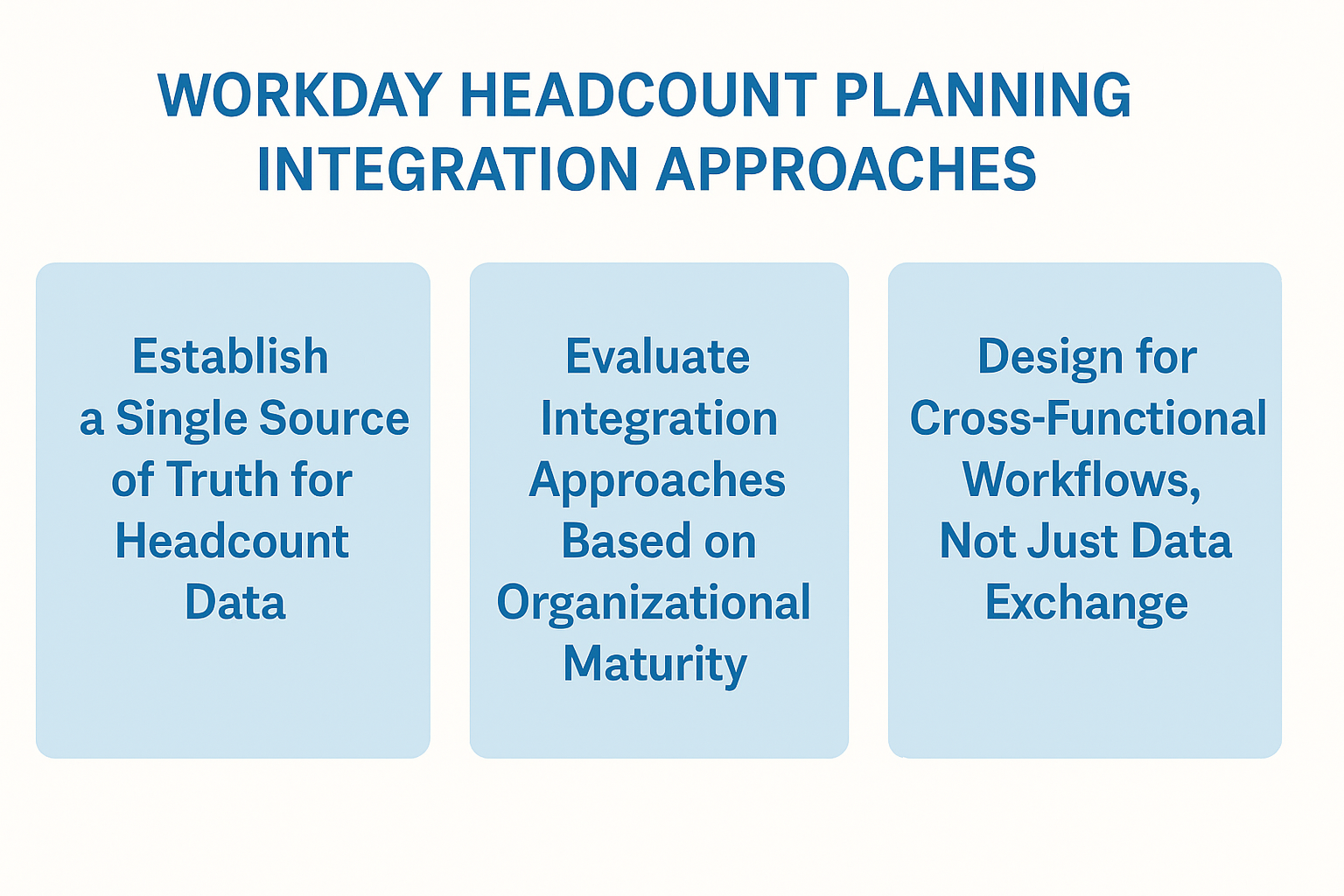
3 Strategic Approaches to Headcount Planning Integration
Establish a Single Source of Truth for Headcount Data - Implement structured change management for organizational data, create comprehensive data validation processes, and establish clear reconciliation procedures.
Evaluate Integration Approaches Based on Organizational Maturity:
Workday Studio: Maximum flexibility but requires significant technical expertise and ongoing maintenance.
ATS Vendor Solutions: Faster Workday integration with standardized functionality (e.g., Greenhouse's HRIS Link).
Kinnect: Designed specifically for headcount management, provides the flexibility of custom integrations with the speed and ease of vendor-provided solutions. Features include built-in workflow management, reporting, real-time bidirectional synchronization, Slack integrations, and scalability.
Design for Cross-Functional Workflows, Not Just Data Exchange - Support complete processes like annual headcount planning, incremental headcount requests, job requisition management, and reorganization.
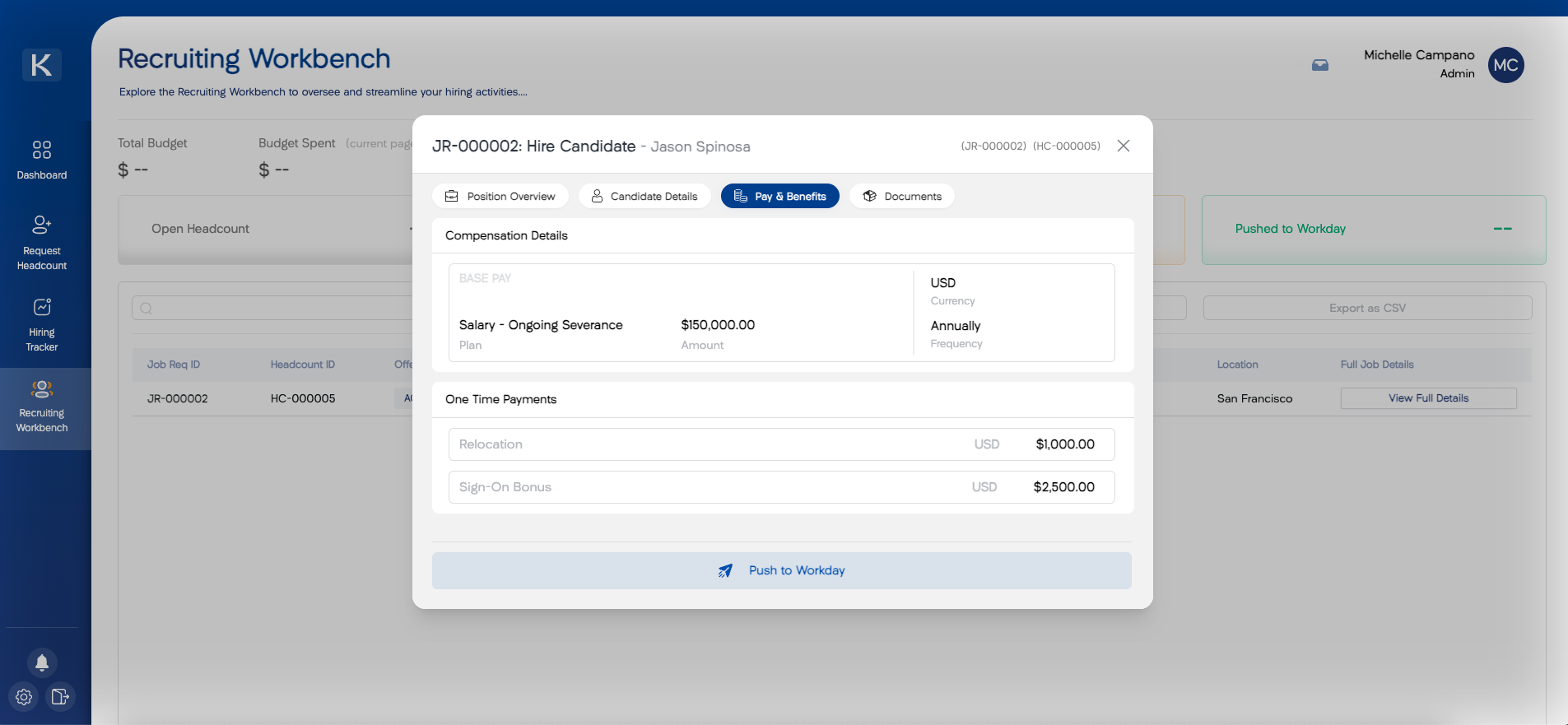
Transform Your Headcount Management through Strategic Integration with Kinnect
The most successful implementations share common characteristics:
They establish clear ownership and accountability for headcount data
They prioritize user experience for each stakeholder group
They implement appropriate validation and reconciliation processes
They focus on supporting end-to-end workflows, not just data exchange
They choose headcount planning integration approaches that match their organizational maturity
Kinnect is specifically designed to address these headcount planning integration challenges by creating a seamless bridge between Workday, your ATS, and your financial planning systems. Built-in, no-code, bidirectional integrations provide each stakeholder with the information they need in the format they prefer in real time, while maintaining data integrity across the entire ecosystem.
Ready to transform your approach to headcount planning? Contact us or book your personalized demo to learn how our expertise and purpose-built solutions can help your organization create a more efficient, accurate, and strategic workforce planning process.
Ready to transform your headcount management? Book a demo with Seena