
Workday Integration Architecture: Building Your Single Source of Truth for Headcount Data

So you've consolidated your HR tech stack into Workday, expecting seamless data flow and unified reporting. Instead, you're dealing with integration errors, mismatched headcount numbers between systems, and constant manual reconciliation between your HRIS, ATS, and planning systems.
The culprit? Foundation data fragmentation--when foundational data like organizational hierarchies, job profiles, and compensation details aren't consistently reflected across your integrated systems.
The Foundation Data Fragmentation Crisis
When Workday positions become the source of truth, but that truth gets distorted as it flows to other platforms, everything downstream breaks: recruiting processes stall, financial forecasting becomes unreliable, and your teams waste countless hours troubleshooting data discrepancies instead of focusing on strategic work.
Loss of Time and Money Due to Troubleshooting
Integration errors become everyone's problem and nobody's responsibility. Recruiting Ops blames HR Ops, HR Ops points to IT, and meanwhile, positions can't be created in your ATS because the integration is broken.
Delays in Recruiting Start and Onboarding
When position data can't flow from Workday to your ATS, recruiting stops completely. When offer data can't flow back to Workday, onboarding gets delayed--meaning new hires can't access systems to complete I-9s, select benefits, or request equipment. A simple organizational change in Workday can delay a new hire's start date by weeks.
Delays in Forecasting
Finance teams need real-time position data from Workday to run accurate forecasts, but when that data is stale or inconsistent, they spend days or weeks just gathering baseline information before they can even begin forecasting.
Consider this real scenario: A company shifts 10 sales positions to engineering roles due to market conditions, but the recruiting team doesn't get updated data in time. They hired three salespeople and extended two offers before learning about the change, resulting in $300,000 in unplanned, sunk salary costs and wasted recruiting resources that should have been focused on engineering roles.
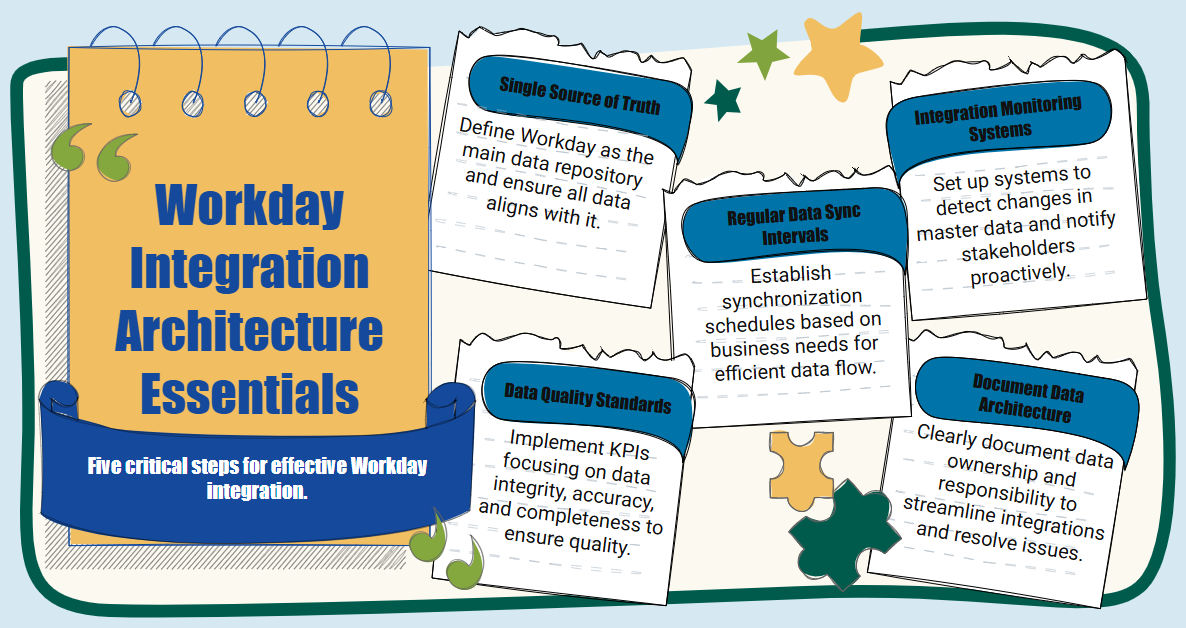
5 Steps to Build Proper Workday Integration Architecture
Define Workday as the Single Source of Truth for all Foundational Data - This includes organizational structures, job profiles, compensation plans, and worker information.
Implement Data Quality Standards at the Source - Focus on three critical KPIs: data integrity, data accuracy, and data completeness. If your data quality is poor in Workday, you'll have garbage in, garbage out across all integrated systems.
Establish Regular Data Synchronization Intervals Based on Your Business Needs - Some organizations sync hourly for critical data elements, while others can manage with daily updates.
Create Integration Monitoring and Alerting Systems - These should proactively identify when foundation data changes might impact downstream processes.
Document Your Data Architecture Decisions Clearly - Every stakeholder should understand which system owns what data, how changes propagate through the ecosystem, and who's responsible for maintaining data integrity at each step.
Create Bulletproof Data Architecture in Workday with Unified Headcount Management Software
Complete Data Foundation with Daily Synchronization
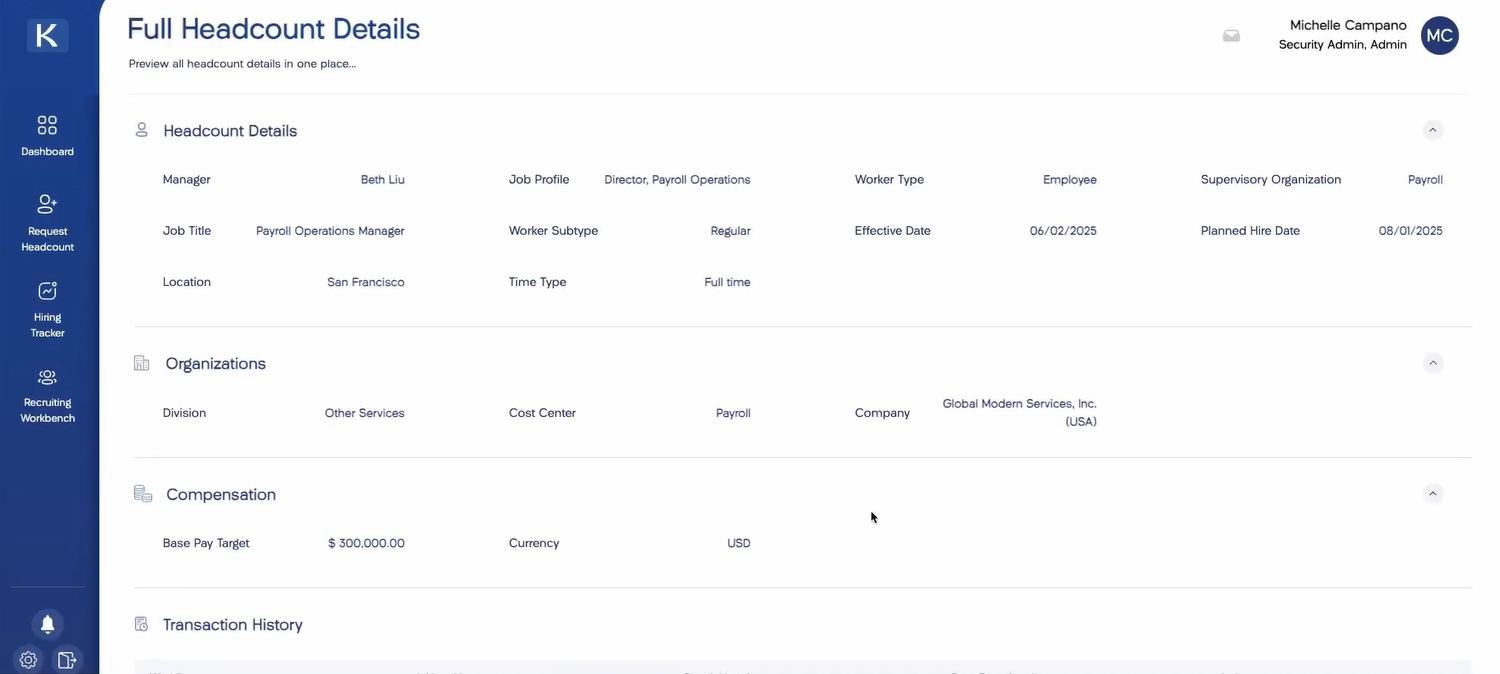
When we onboard a customer, we perform a complete data ingestion from Workday of all foundational elements: organizational structures, job profiles, compensation components, and locations. This data gets stored in our relational database and refreshed daily.
Automatic Data Integrity Maintenance
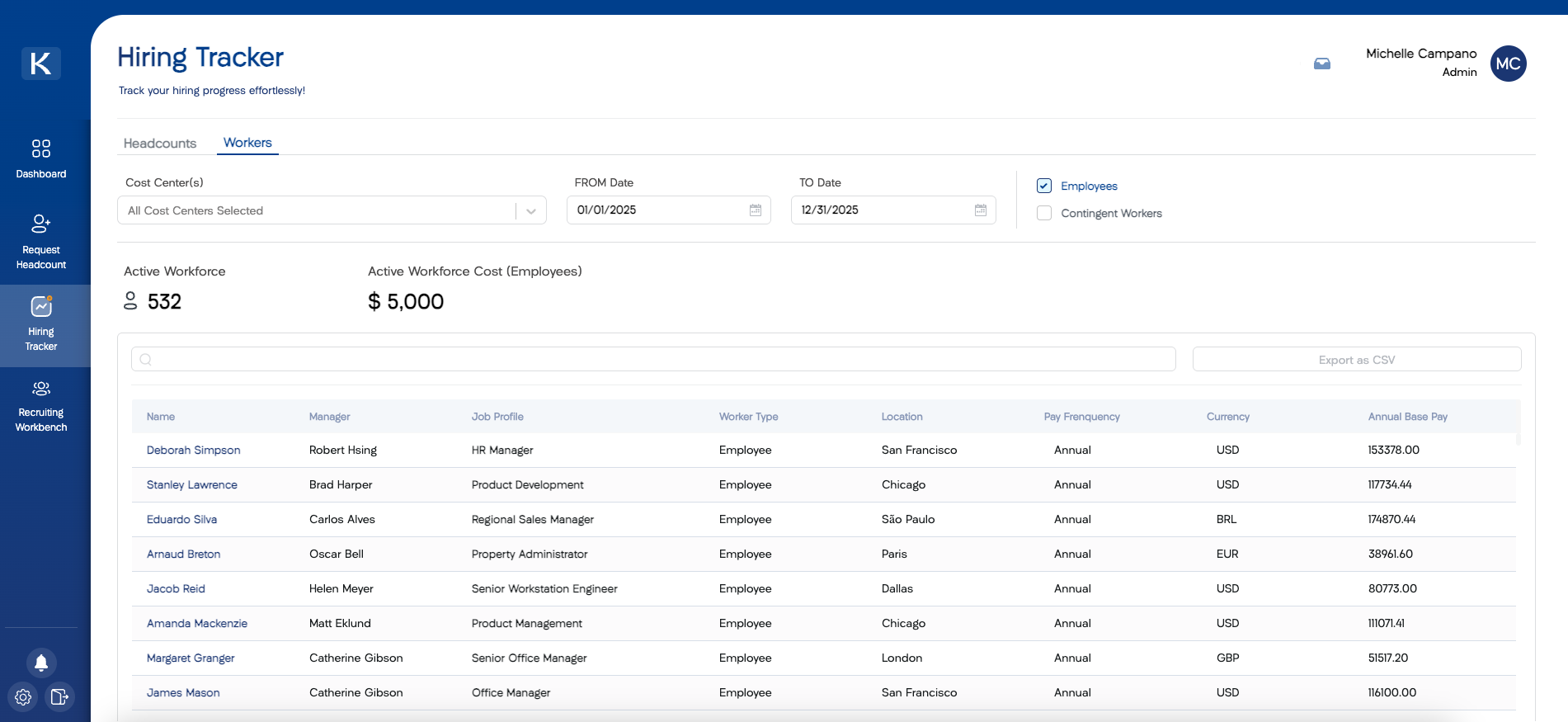
When organizational changes happen in Workday, Kinnect detects these changes during our daily sync and intelligently updates all dependent headcount records within Kinnect and in all downstream systems.
Proactive Integration Validation
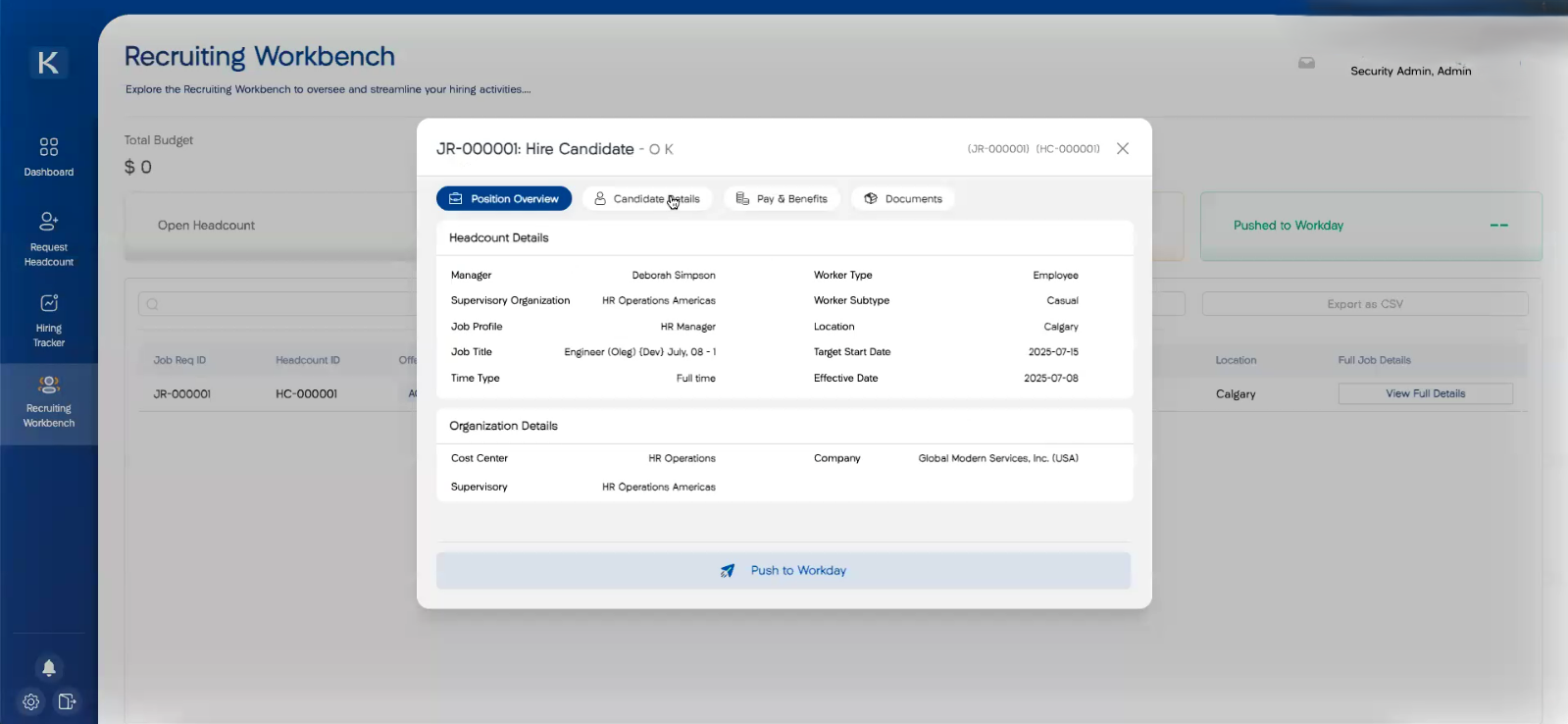
Real-time validation prevents integration breakdowns before they happen. Unlike traditional point-to-point integrations that break when source data changes, Kinnect validates all data against current Workday structures before creating positions or pushing candidate information.
For example, when a marketing operations cost center gets consolidated under general marketing, traditional integrations would break. Kinnect automatically detects the change, maps the old structure to the new one, and updates all relevant headcount records without any user intervention.
User-Friendly Error Resolution
Intelligent error handling provides actionable solutions rather than technical jargon. When data conflicts arise, Kinnect presents clear options in plain English.
Build Your Single Source of Truth Architecture with Ease Today
Foundation data fragmentation doesn't have to be the hidden tax on your HR operations. The Kinnect team brings 50+ years of collective experience specifically in Workday implementations and position management challenges.
Ready to eliminate foundation data fragmentation? Book your free personalized demo today to discover how Kinnect's integration architecture creates an unbreakable single source of truth for your Workday headcount planning without the complexity and maintenance overhead of traditional approaches.
Ready to transform your headcount management? Book a demo with Seena